


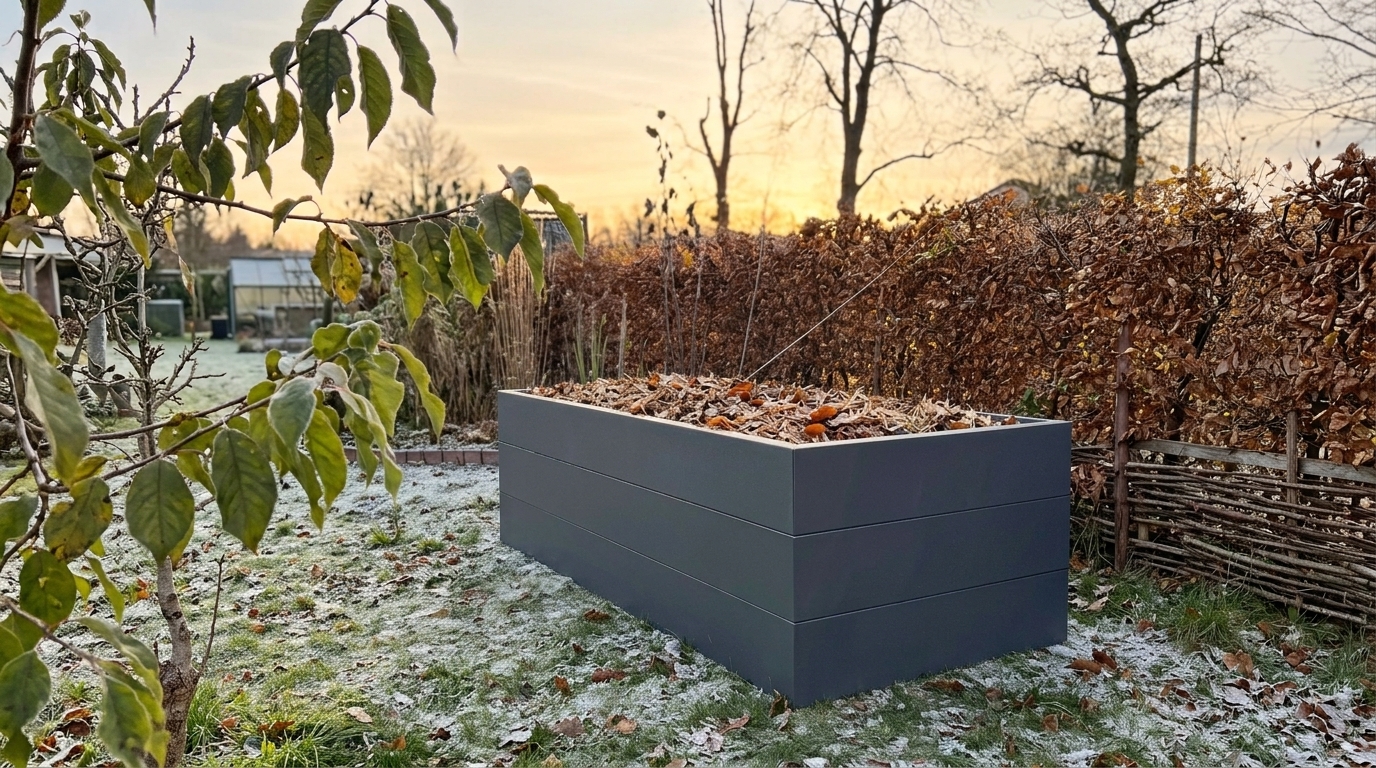
How to Prepare a Raised Garden Bed for Winter
It is important to prepare a raised garden bed properly for cold weather, but there is no need to dismantle it or replace all the soil. GARTENDEK metal raised beds are designed for year-round outdoor use. When correctly assembled, installed in the ground and filled, they do not require seasonal dismantling or special maintenance.
The main autumn tasks involve the soil and plants.
Why autumn preparation matters
After harvesting, plant debris, weeds and exposed patches of soil remain in the bed. Clearing the bed helps remove problematic plant residues, while a protective covering shields the soil surface from rain and wind.
1. Remove spent plants and weeds
Collect remaining crop debris, weeds and annual plants that have finished producing. Add healthy plant residues to your compost. Do not use diseased plants as mulch or put them in a cold compost heap — dispose of them separately. Perennials and overwintering crops do not need to be removed.
2. Check the fill level
In a deep raised bed, the lower organic layers gradually decompose and settle. This is a completely normal process, especially after the first growing season.
If the soil level has dropped noticeably, top up the upper planting layer with suitable soil. You can do this in autumn or before planting in spring.
Important: There is no need to replace the entire fill every year. Choose fertilisers according to the soil's condition and the needs of the crops you plan to grow. Do not apply fertilisers “just in case”, especially nitrogen fertilisers before the dormant period.
3. Protect the soil surface
After clearing the bed, it is best not to leave the soil bare throughout winter. Choose one of the two main methods of protection.
Organic mulch
Mulching is a simple option if the growing season has ended. Straw and fallen leaves are suitable for a vegetable bed. They cover the surface and gradually add organic matter to the soil.
Green manures
Green manures are suitable when there is enough time for them to grow after harvesting. Choose them according to your climate and sowing date. Options include oats, rye and some legumes.
When sowing green manures, plan ahead for spring management: cut back overwintered plants in good time, before they set seed. After incorporating the green plant material into the soil, allow a break before sowing or planting vegetables — approximately one month. The exact interval depends on the green manure species, the vegetable crop, soil temperature and moisture, and the rate at which the plant residues decompose.
In summary
Preparing a raised bed for winter does not take much time or complicated work. The key steps are to remove plant residues promptly, top up the soil layer if necessary and avoid leaving the soil bare before frost arrives.
Simple autumn tasks help protect the soil and create a good foundation for an excellent harvest next season. GARTENDEK metal raised beds do not need to be dismantled for winter — in spring, you can continue preparing the soil and planting.
Leave a comment