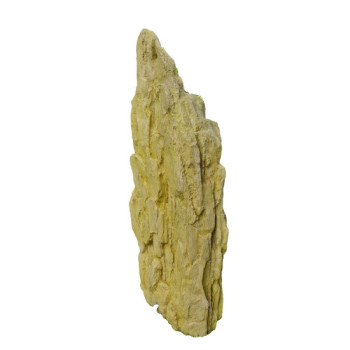
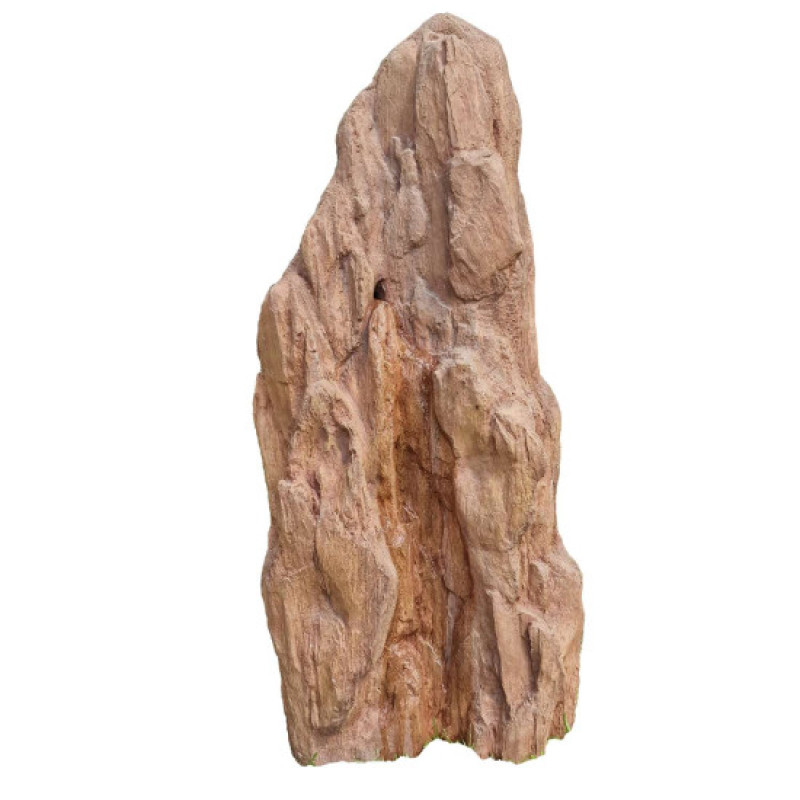
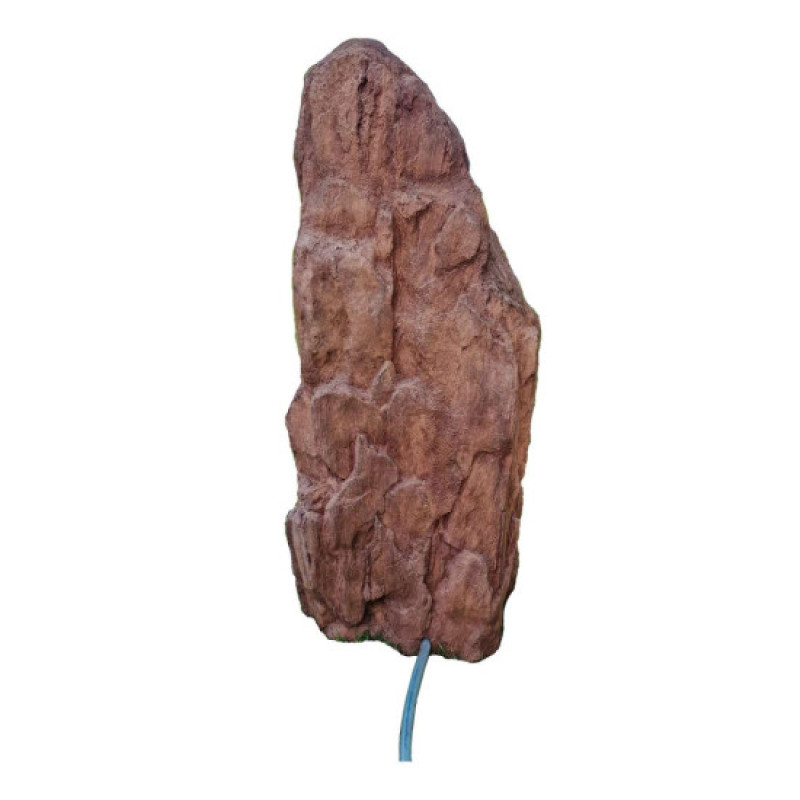
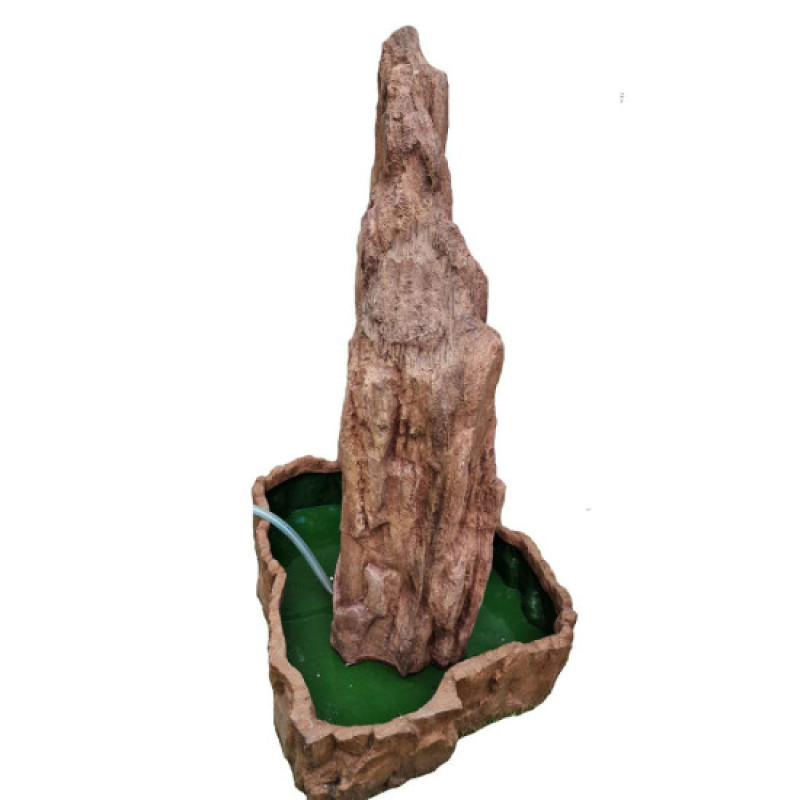
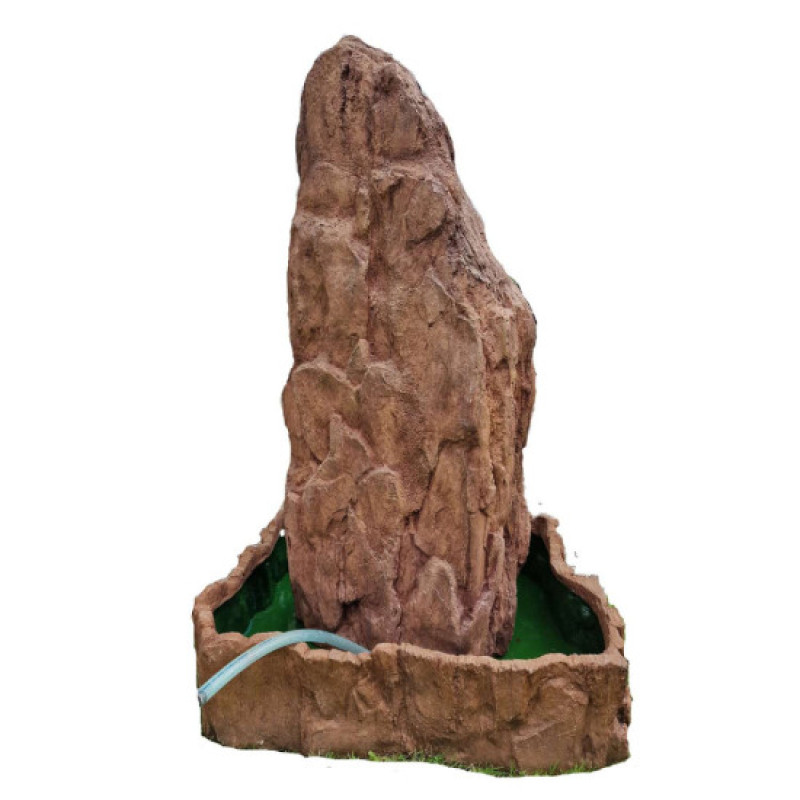
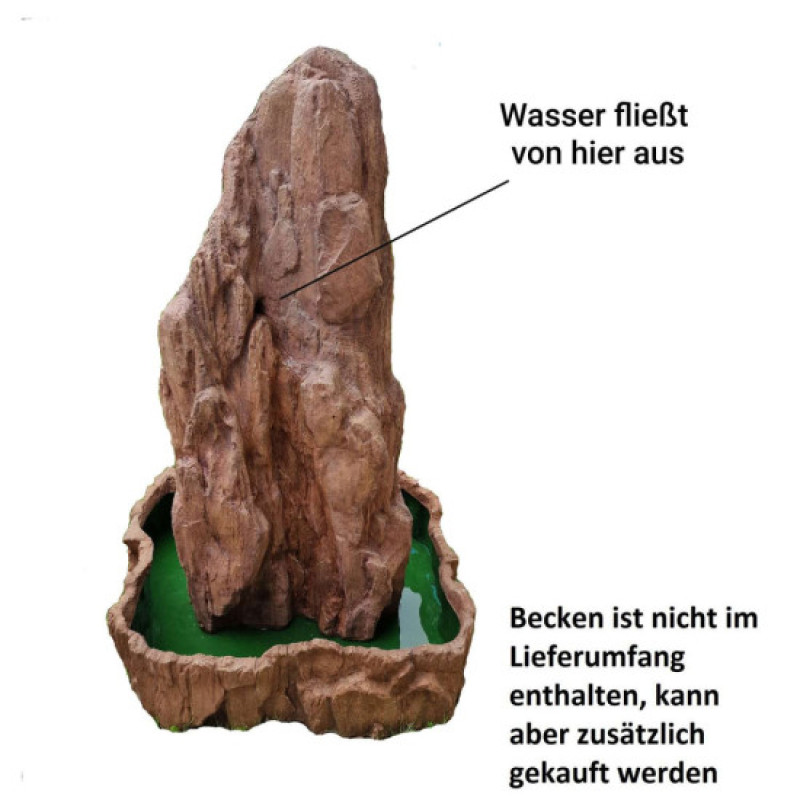
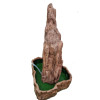
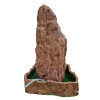
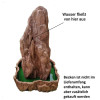
- Stock: In Stock
- Model: Wasserspiel Stein für Garten – Standbrunnen Teichzubehör
- Weight: 32.00kg
- Dimensions: 70.00 cm × 43.00 cm × 153.00 cm
- Description
- Problem & Solution
- How It Works
- Material & Warranty
- Use Cases
- In the Range
- Environment
- FAQ
✅ Can be used separately or together with other water features.
✅ Natural looking decoration for your garden.
✅ The material, high-quality fiberglass of our garden pond waterfalls is 100% frost-proof.
✅ This ornamental fountain garden is UV and weather resistant and therefore retains its natural color for many years.
Environment — Water Decor (GARTENDEK)
1. Carbon Footprint (Production & Logistics)
The carbon footprint of GARTENDEK Water Decor systems is determined by three factors: HDPE production for the basin, composite material production for the stone, manufacturing location, and logistics distance.
Materials — Basin: HDPE (high-density polyethylene) is a petroleum-based polymer. However, the declared service life of 50+ years significantly reduces the carbon footprint per year of use compared to shorter-lived alternatives (e.g., concrete basins with liners that require replacement).
Materials — Stone: The composite fountain stone uses gelcoat, polyester resins, fiberglass, and marble chips. The long service life (10+ years) and stone weight (15–50+ kg depending on model) spread the carbon footprint over many years of use.
Production: All components are manufactured within the EU under GARTENDEK quality control. European production significantly reduces transport distance compared to non-EU alternatives.
Logistics — Basin: The HDPE basin is shipped assembled on a wooden pallet. Basin weight ranges from 50 kg (220L) to 70 kg (600L). The wooden pallet adds approximately 15–20 kg. Freight delivery within the EU generates 35–70 kg CO₂e per shipment depending on model and distance.
Logistics — Stone: The composite stone is shipped in an individual wooden crate. Stone weight ranges from 15 kg (small) to 50+ kg (XXXL). Courier or freight delivery adds 15–120 kg CO₂e depending on size and distance.
Numerical estimate (system average): For a complete fountain system (basin + stone) delivered within Central Europe, the estimated carbon footprint is approximately 60–150 kg CO₂e per system.
2. Zero Plastic Packaging
GARTENDEK Water Decor components are shipped with minimal to zero plastic packaging.
Basin packaging: The HDPE basin is secured on a wooden pallet using straps. No plastic packaging — no stretch film, no PVC ties, no plastic bags. Plastic content: 0%.
Stone packaging: The composite stone is shipped in an individual wooden crate with stretch film (perforated for handholds) and PVC ties. This is the only plastic component — less than 1% of total packaging weight.
Customer action — Basin: Remove straps, lift basin off pallet. The wooden pallet can be reused, dismantled for firewood, or disposed of as non‑hazardous waste.
Customer action — Stone: Remove 2–3 screws at marked locations, cut PVC ties with a knife or scissors. The stretch film and PVC ties are recyclable as plastic waste (PP/PVC). The wooden crate can be dismantled and used as firewood or recycled as clean wood.
3. Water Conservation
The Water Decor system is designed as a closed‑loop water circulation system with minimal water consumption.
Closed‑loop design: Water circulates continuously between the basin and the fountain stone. No connection to mains water is required after initial filling. Evaporation losses are minimal (typical 1–5% per week depending on climate).
No drainage required: The system does not require a drainage connection. Water is not discharged into the ground or sewage system.
Water volume: The basin holds 220 litres (small) or 600 litres (large) of water. This is a one‑time fill; only top‑up for evaporation is needed thereafter.
Freeze tolerance: The HDPE basin is rated for freeze tolerance down to −15 °C. Water can freeze inside the basin without damaging the structure. In northern regions, the pump should be removed for winter.
Verdict: The product enables water‑efficient water features with minimal ongoing water consumption — unlike traditional fountains that require constant mains water connection.
4. Food Waste Reduction
The Water Decor system is not directly involved in food production or storage. However, it contributes indirectly through:
Edible landscaping support: The fountain can be placed adjacent to vegetable beds, herb gardens, or fruit bushes — creating aesthetically pleasing edible landscapes without soil contamination risks. Both the HDPE basin and composite stone are chemically inert and do not leach into soil or water.
No direct effect on food waste: The product's contribution to food waste reduction is neutral (by enabling integrated garden designs without negative environmental impact).
5. Product Lifecycle
Declared service life — Basin: 50+ years of underground or above‑ground use under normal conditions (temperature range −30 °C to +60 °C, freeze‑thaw cycles, soil pressure, water contact).
Declared service life — Stone: 10+ years of outdoor use with permanent water contact (temperature range −30 °C to +60 °C, UV exposure, water immersion).
Design philosophy: The system is engineered as a permanent water feature — not a disposable seasonal item. The HDPE basin (∼8 mm thickness, radial reinforcement ribs) is designed to remain structurally stable for decades. The composite stone (gelcoat + fiberglass + marble surface) is designed to remain visually and structurally stable for a decade or more.
Maintenance requirements — Basin: None. No sealing, no waterproofing, no corrosion protection. The pump requires periodic cleaning (every 3–6 months).
Maintenance requirements — Stone: None. No seasonal treatment, no repainting, no sealing.
Failure modes — Basin: HDPE may eventually become brittle after extreme UV exposure (not applicable for underground installation). Under normal use (buried or sheltered), the material does not biodegrade, rot, or corrode. Mechanical damage from heavy impact is possible but unlikely.
Failure modes — Stone: The stone may eventually develop surface wear (chalking, fading) or structural damage from extreme impact. It does not rot, warp, or biodegrade prematurely.
Obsolescence: The system does not become functionally obsolete. It can be excavated, moved to a new location, and reinstalled at any time.
6. Transport Packaging
Basin packaging:
- Wooden pallet (custom‑sized) — reusable, recyclable
- Straps (polyester or metal) — recyclable
- No plastic film, no cardboard, no void fill
- Pallet dimensions: ~100×80×60 cm (220L) or ~120×80×80 cm (600L)
- Pallet weight: 15–20 kg
Stone packaging:
- Individual wooden crate (softwood, spruce or pine)
- Crate dimensions: 70×50×30 cm (S) to 170×90×55 cm (XXXL)
- Crate weight: 2–12 kg depending on stone size
- Stretch film (LDPE) and PVC ties — less than 1% of packaging weight
Logistics class — Basin: Standard pallet freight (not courier). The basin is shipped fully assembled — no flat‑packing due to the welded HDPE structure.
Logistics class — Stone: Standard courier for S/M/L sizes; pallet or special freight for XL/XXXL sizes.
Space efficiency — Basin: The basin occupies its full volume during transport. Void space inside the basin is not used for other products to prevent damage.
Space efficiency — Stone: The wooden crate is form‑fitted to each stone. Void space is minimal (typically less than 10% of crate volume).
7. End‑of‑Life & Recyclability
Material composition — Basin:
- HDPE (high‑density polyethylene) — >98% of product weight
- Metal screws and fittings — small quantity, recyclable
Material composition — Stone:
- Gelcoat (ISO/NPG) — thermoset polymer, not melt‑recyclable
- Polyester resins — thermoset polymer, not melt‑recyclable
- Fiberglass (glass fibre reinforcement) — non‑recyclable in mixed composite form
- Marble chips and sand — inert mineral filler
Current recyclability status — Basin: HDPE is fully recyclable through standard plastic recycling streams (recycling code #2). HDPE is one of the most widely recycled plastics in the EU, with established collection and reprocessing infrastructure.
Current recyclability status — Stone: The multi‑layer composite structure is not recyclable through standard municipal waste streams. Thermoset polymers cannot be remelted. Separation of layers is not economically feasible at scale.
Responsible disposal options — Basin:
- Plastic recycling (preferred) — the basin can be shredded and reprocessed into new HDPE products (pipes, containers, panels)
- Reuse (best option) — excavate and sell/give away for continued use as a fountain basin or other water containment application
- Energy recovery (incineration with power generation) — HDPE has high calorific value (∼46 MJ/kg)
Responsible disposal options — Stone:
- Landfill (non‑hazardous) — the material is chemically inert and does not leach toxins
- Energy recovery (incineration with power generation) — the polymer fraction has calorific value
- Downcycling (crushing as mineral aggregate) — marble chips and sand can be recovered as filler material
Comparison to alternatives — Basin:
- Concrete basin — not recyclable (crushable as aggregate, but energy‑intensive), significantly heavier (5–10×), requires demolition
- Fiberglass basin — difficult to recycle (thermoset polymer), often ends up in landfill
- PVC liner system — short service life (10–15 years), difficult to recycle, higher long‑term waste
Comparison to alternatives — Stone:
- Natural stone — not recyclable either, but can be crushed as aggregate
- Concrete — crushable as aggregate, but significantly heavier (15–20×) and less resource‑efficient during use
Circular economy potential — Basin: HDPE can be recycled indefinitely without loss of material properties. GARTENDEK encourages reuse and recycling at end of life.
Future improvements — Stone: GARTENDEK is monitoring developments in thermoset polymer recycling (solvolysis, pyrolysis) but does not currently offer closed‑loop recycling.
8. Summary Table (Category Ranges)
| Parameter | Range / Value |
|---|---|
| Product name | GARTENDEK Water Decor — Fountain Basin (220L / 600L) + Composite Stone |
| Declared service life — Basin | 50+ years |
| Declared service life — Stone | 10+ years |
| Water volume | 220 L (small) or 600 L (large) |
| Basin weight (product only) | 50 kg (220L) or 70 kg (600L) |
| Stone weight | 15–50+ kg (depending on model) |
| Basin packaging | Wooden pallet — plastic content: 0% |
| Stone packaging | Wooden crate — plastic content: less than 1% |
| Carbon footprint estimate (system: basin + stone, delivery within EU) | 60–150 kg CO₂e |
| Water consumption during use | 220–600 L (one‑time fill) + minimal top‑up for evaporation |
| Recyclability — Basin | Fully recyclable — HDPE (#2) |
| Recyclability — Stone | Not recyclable — landfill or energy recovery |
| Material leaching into soil/water | None — HDPE and composite stone are chemically inert |
| Freeze tolerance — Basin | −15 °C (water can freeze inside) |
| Freeze tolerance — Stone | −30 °C to +60 °C (year‑round outdoor use) |
9. EU Environmental Frameworks
REACH (EC 1907/2006): All materials used (HDPE for basin; gelcoat, polyester resins, fiberglass, marble chips for stone) are REACH‑registered substances. No SVHC (Substances of Very High Concern) are intentionally added. HDPE contains no plasticisers, BPA, or heavy metals.
CE marking (Construction Products Regulation CPR — EU 305/2011): Water Decor components are not classified as construction products under CPR. They are landscape water feature components and do not require CE marking.
EU Ecolabel (optional): The product does not carry EU Ecolabel certification. However, the basin's long service life (50+ years) and full HDPE recyclability align with Ecolabel principles. The composite stone does not meet current criteria for "easy recyclability".
Waste Framework Directive (2008/98/EC): The wooden pallet and crate are classified as non‑hazardous waste (EWC 15 01 03 — wooden packaging). The HDPE basin is classified as non‑hazardous plastic waste (EWC 02 01 04 — waste plastic). The composite stone is classified as non‑hazardous industrial waste (EWC 10 11 03 — waste from composite materials).
Single‑Use Plastics Directive (SUP — EU 2019/904): The basin uses no single‑use plastic packaging and falls outside the scope of SUP. The basin itself is a durable, long‑life product, not a single‑use item. The stone uses minimal stretch film and PVC ties (less than 1% of packaging weight).
EU Green Deal / Circular Economy Action Plan: The product aligns with durability and recyclability principles: extremely long service life for the basin (50+ years), long service life for the stone (10+ years), no planned obsolescence, fully recyclable HDPE, and minimal plastic packaging. Plastic recycling and durability are priorities in EU circular economy targets.


-90x90.png "Arthur on pedestal (square) black/bronze, 20 cm")
-90x90.png "Arthur on pedestal (square) ivory, 20 cm")