


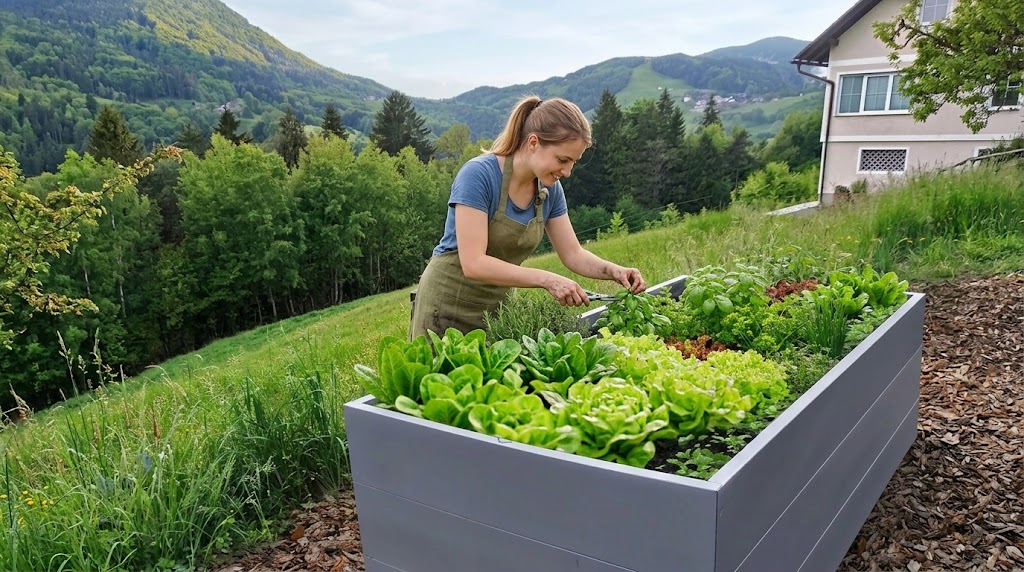
What to Plant in a Raised Bed: Successful Companion Planting Plans for Vegetables and Herbs
A raised bed allows you to grow vegetables, herbs and flowers in a relatively small area. However, good results depend on more than the plants you choose. It is important to consider their height, growth rate, water requirements, mature size and time to harvest in advance.
4 rules for successful companion planting
- Arrange plants by height. Plant tall crops such as tomatoes, cucumbers on a trellis and peas on the north side of the bed so that they do not shade shorter plants such as lettuce, radishes and spinach, which should be placed closer to the south side.
- Combine crops with different harvest times. Sow fast-growing crops such as radishes, rocket and leaf lettuce in early spring. You can harvest them before the main warm-season plants, including tomatoes, peppers and cabbage, fill the available space.
- Consider watering needs. Grow moisture-loving plants such as cucumbers, lettuce and leafy herbs in one area, and keep drought-tolerant herbs such as thyme, sage and rosemary in a separate zone.
- Do not overcrowd the bed. Consider the mature size of each plant. Start with the main crop, then fill the remaining spaces with compact plants.
5 ready-to-use planting plans
Plan 1. Tomatoes, basil and leaf lettuce
A practical combination for a sunny position.
- North side: tomatoes in a single row with supports.
- Middle zone: basil between the tomato plants.
- South edge: leaf lettuce, spinach or early radishes.
- Corners: calendula or nasturtiums.
- How it works: lettuce and radishes are harvested before the tomatoes reach their full size. Basil and tomatoes have similar light and watering requirements.
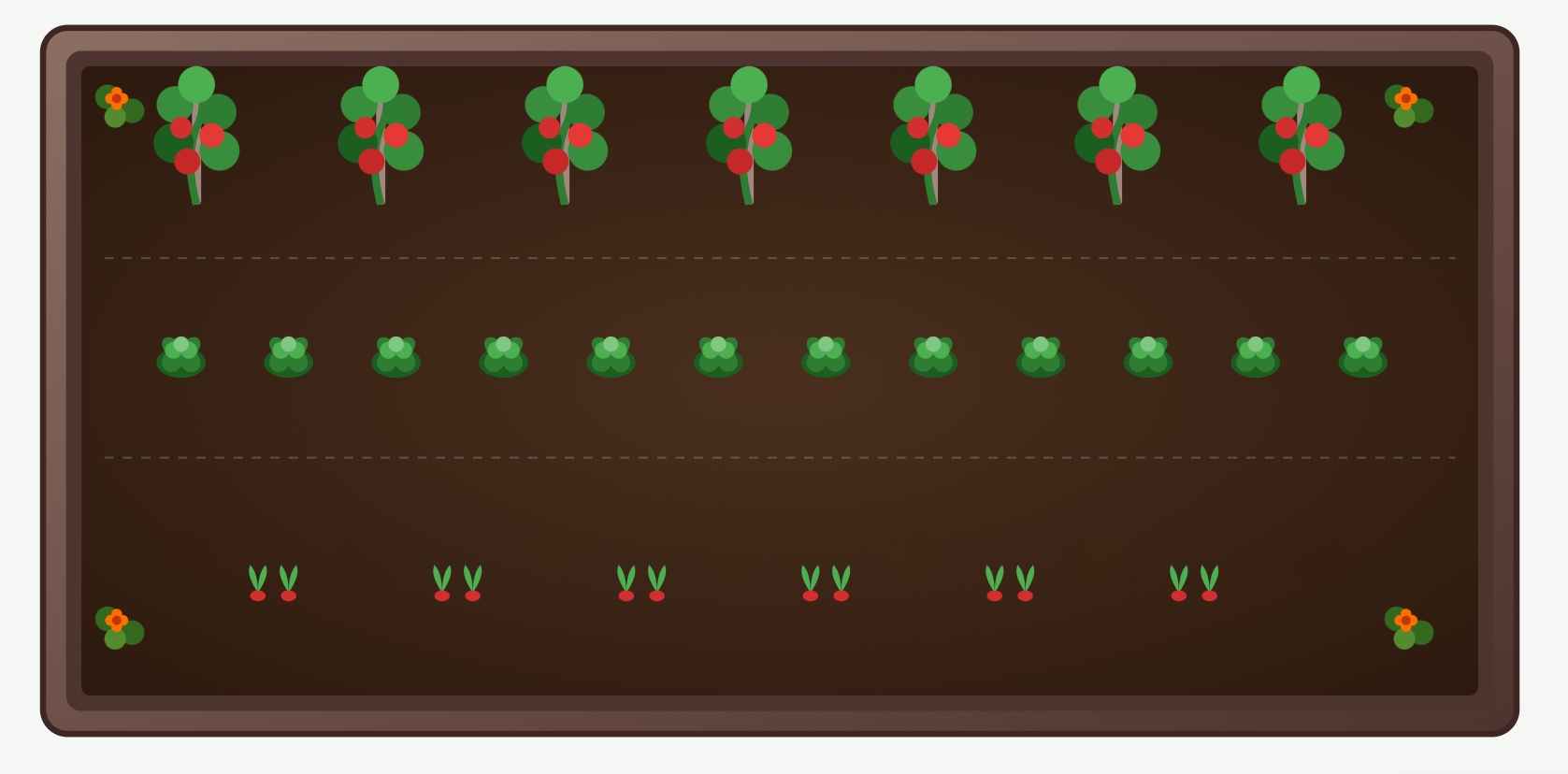
Plan 1. Tomatoes, basil and leaf lettuce
Plan 2. Carrots, onions and fast-growing greens
This plan makes efficient use of different soil levels.
- Main area: alternating rows of carrots and bulb onions or chives.
- Along the edge: radishes as an early temporary crop.
- In the gaps: leaf lettuce or parsley.
- How it works: carrots grow downwards while onions grow upwards. The radishes are harvested before the carrot roots begin to develop actively.
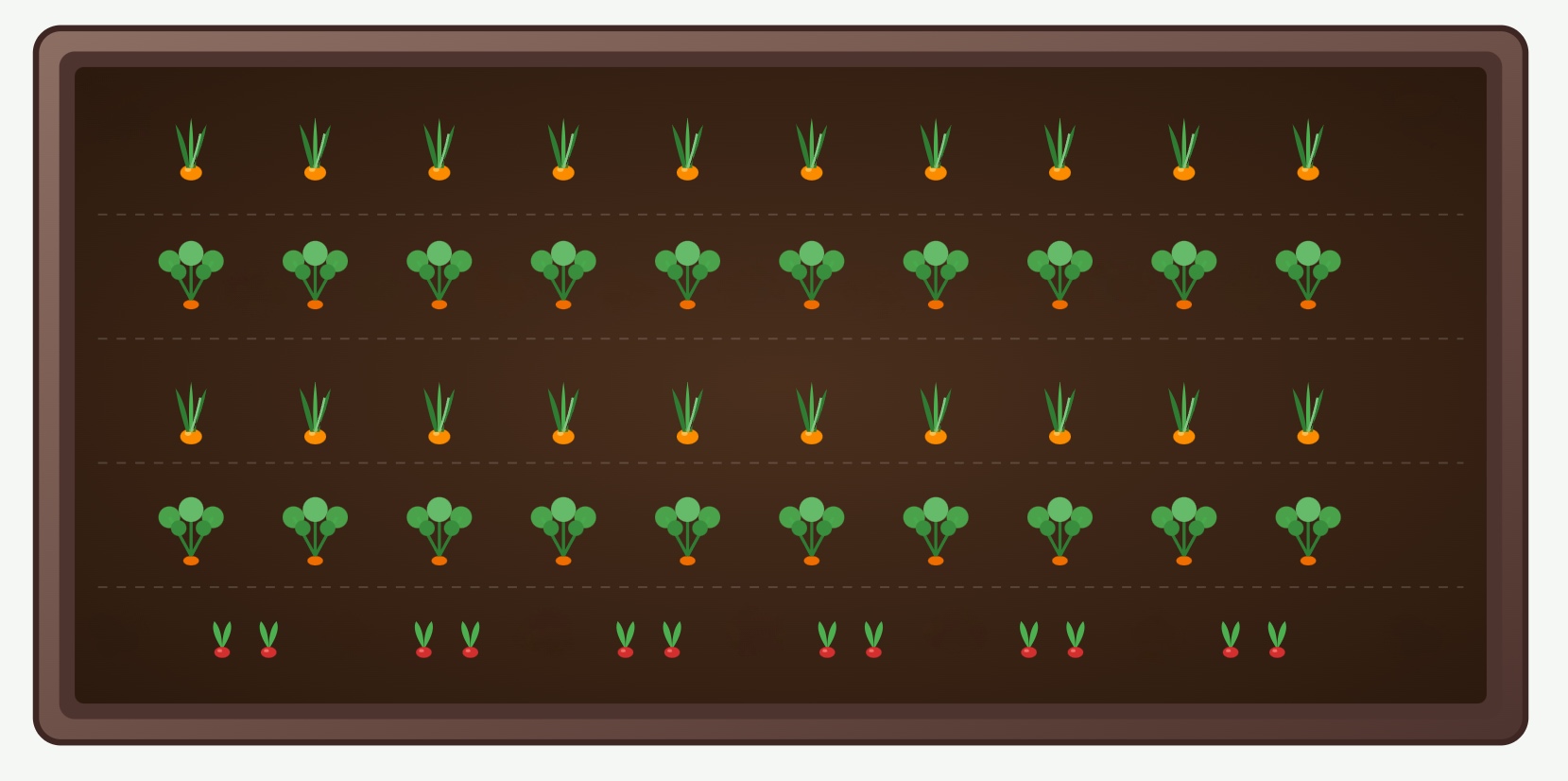
Plan 2. Carrots, onions and fast-growing greens
Plan 3. Cucumbers, dill and lettuce
- North side: cucumbers grown on a trellis or support net.
- In front of the cucumbers: small groups of dill.
- South side: leaf lettuce, rocket or spinach.
- How it works: all these crops need the same generous watering. Growing cucumbers vertically saves space and allows more light to reach the leafy greens.
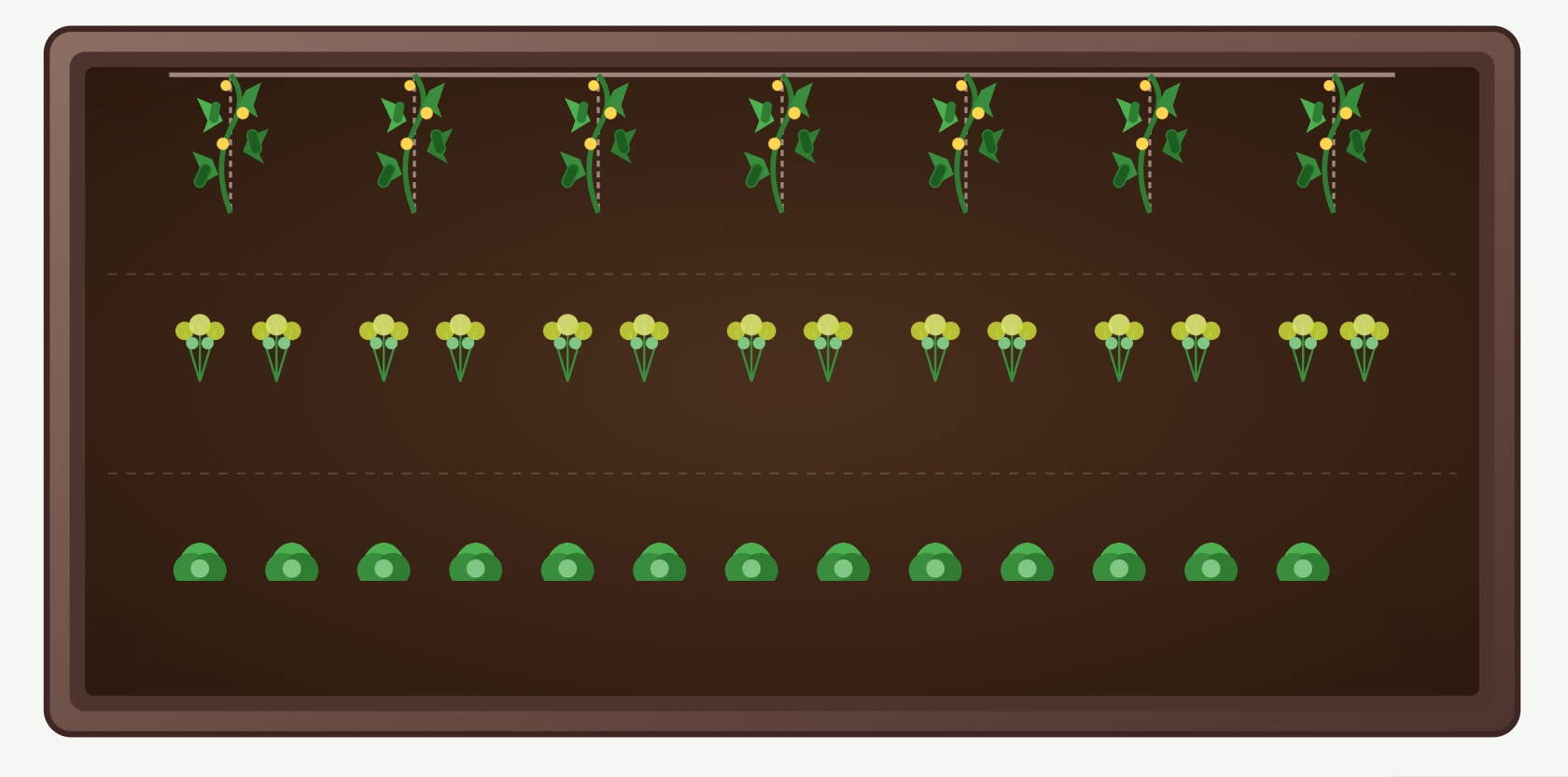
Plan 3. Cucumbers, dill and lettuce
Plan 4. Cabbage, beetroot and celery
- Centre, in a staggered pattern: compact or early cabbage varieties.
- Between the plants: beetroot, leaving space around the cabbage stems.
- Along the edge: leaf celery or lettuce.
- How it works: early lettuce is harvested before the cabbage heads spread out, while beetroot uses the space between the young cabbage plants.
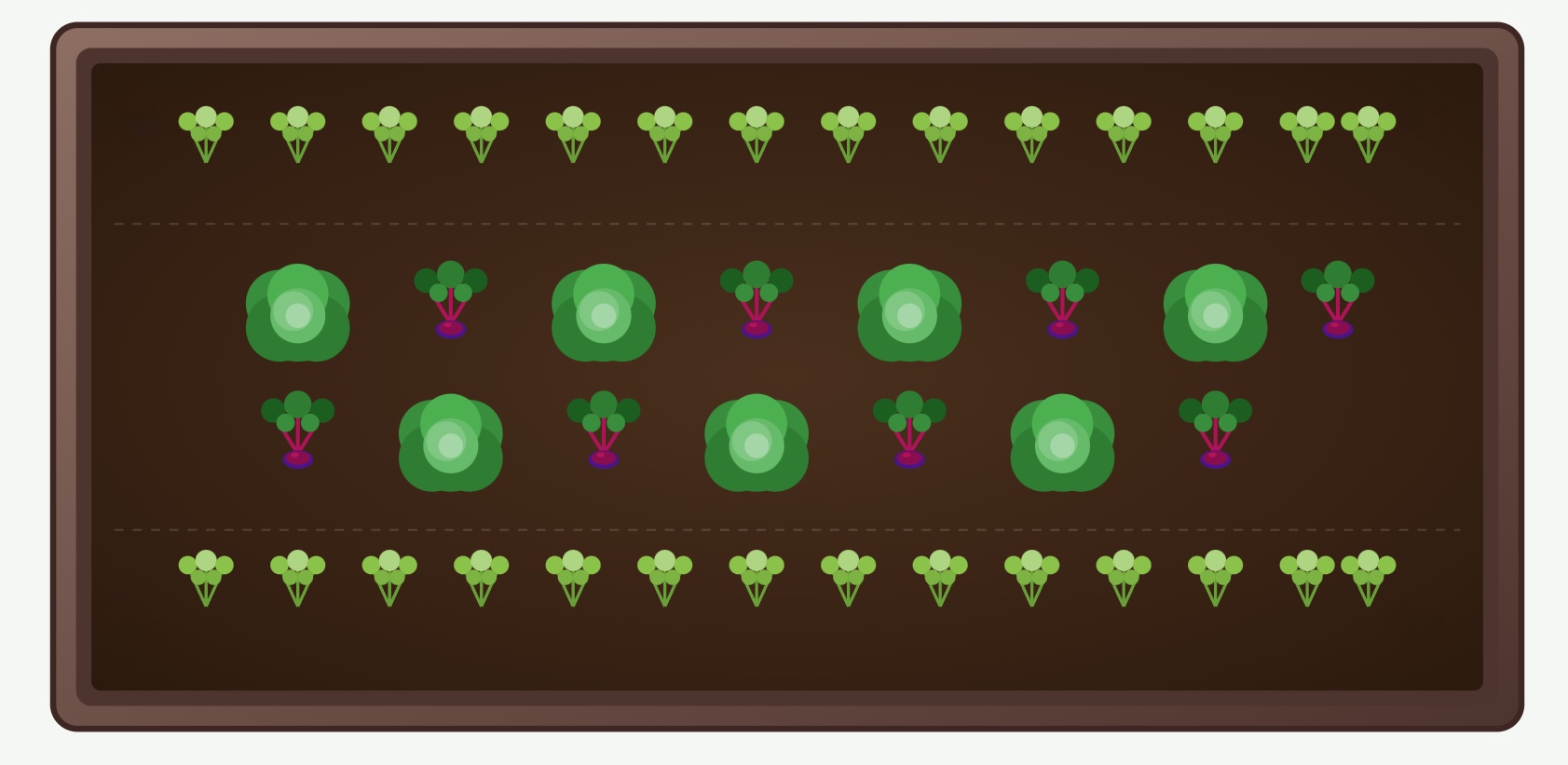
Plan 4. Cabbage, beetroot and celery
Plan 5. Peppers, parsley and chives
- Central area: peppers in one or two rows, allowing for the mature size of each plant.
- Along the edge: parsley and chives.
- Spring gaps: early radishes or lettuce.
- How it works: spring greens and radishes can be harvested before the peppers fill out, while the compact herbs planted along the edge do not shade the sun-loving pepper plants.
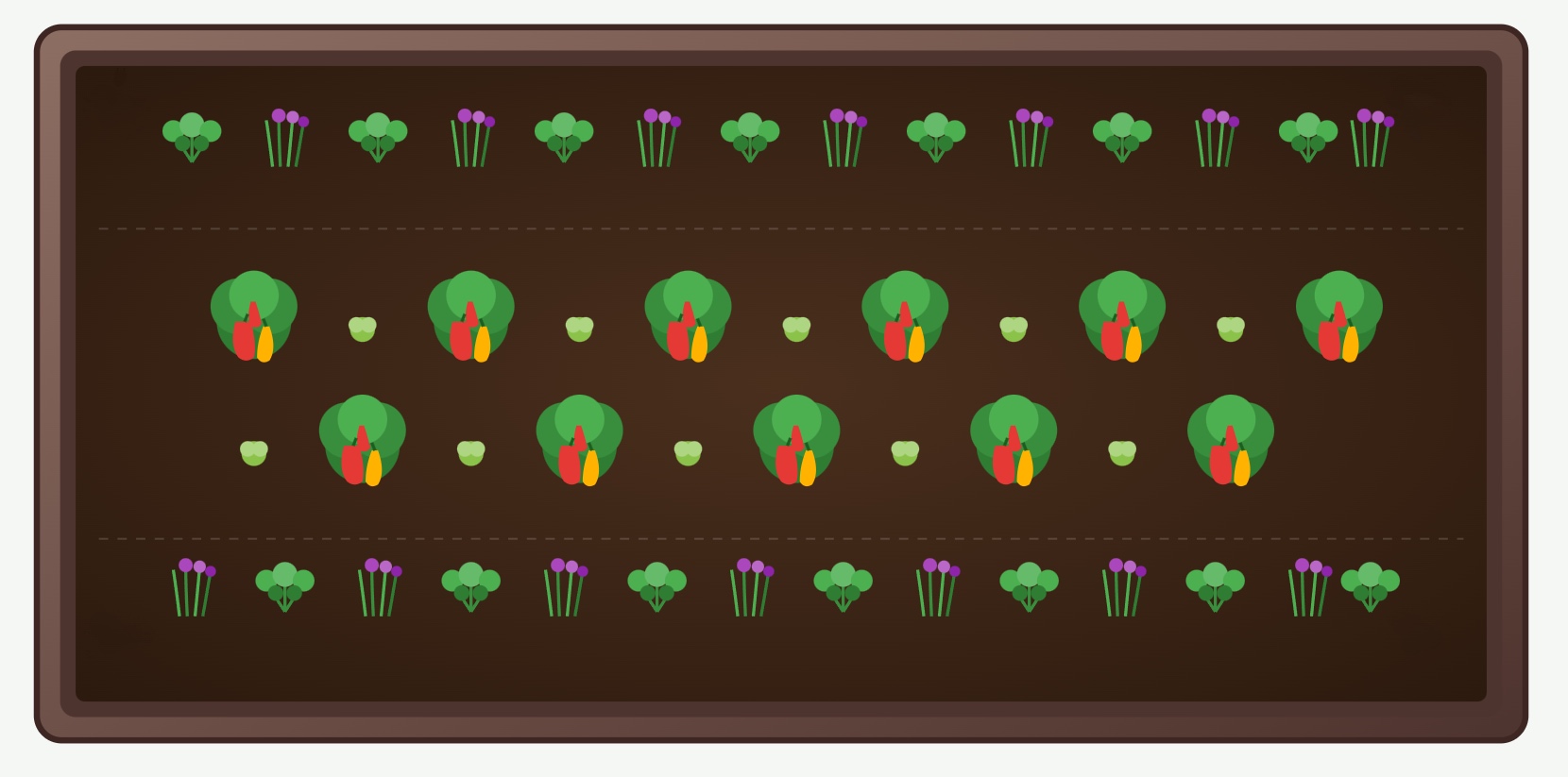
Plan 5. Peppers, parsley and chives
Companion planting chart
This chart does not mean that the plants in the third column must never be grown together. It shows combinations that are more likely to cause practical problems in a small raised bed due to shared diseases, very different care requirements or competition for space.
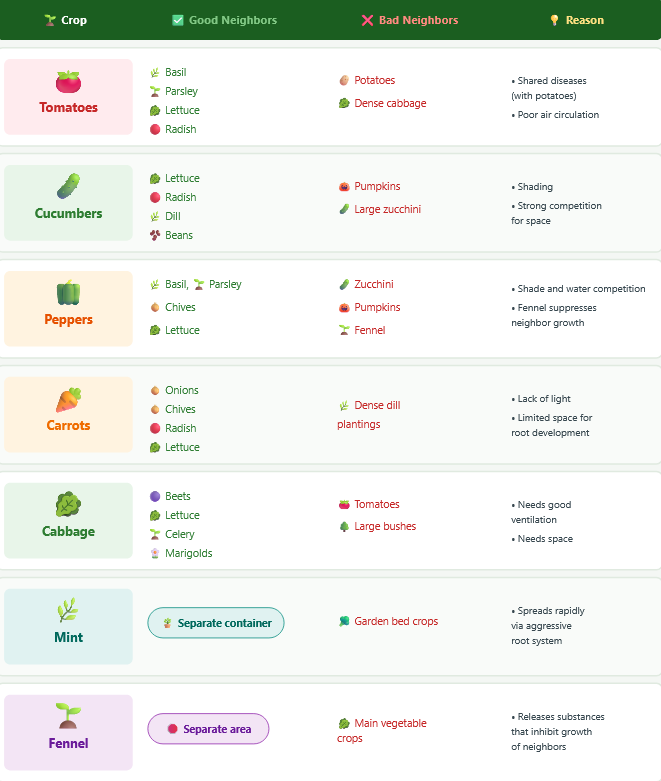
Companion planting chart
How to use the bed throughout the season
The same area can produce several harvests if it is not occupied by one crop from spring to autumn.
- Early spring: sow cold-tolerant greens such as radishes, spinach, rocket and lettuce.
- Late spring to early summer: plant the main seedlings, including tomatoes, peppers, cucumbers and cabbage.
- Summer: resow fast-growing greens such as dill, lettuce and radishes.
- End of the season: sow cold-tolerant greens or green manure crops to help restore the soil.
Conclusion
Successful companion planting is based on balancing light, moisture and available space. Choose one or two main crops, add compact greens with a short growing period and leave enough room for mature plants. This way, a raised bed can produce a succession of harvests throughout the season while remaining easier to maintain.
Already decided what you would like to grow? Visit the GARTENDEK metal raised bed catalogue, choose a suitable model and bring your preferred planting plan to life in your garden.
Leave a comment