- Stock: In Stock
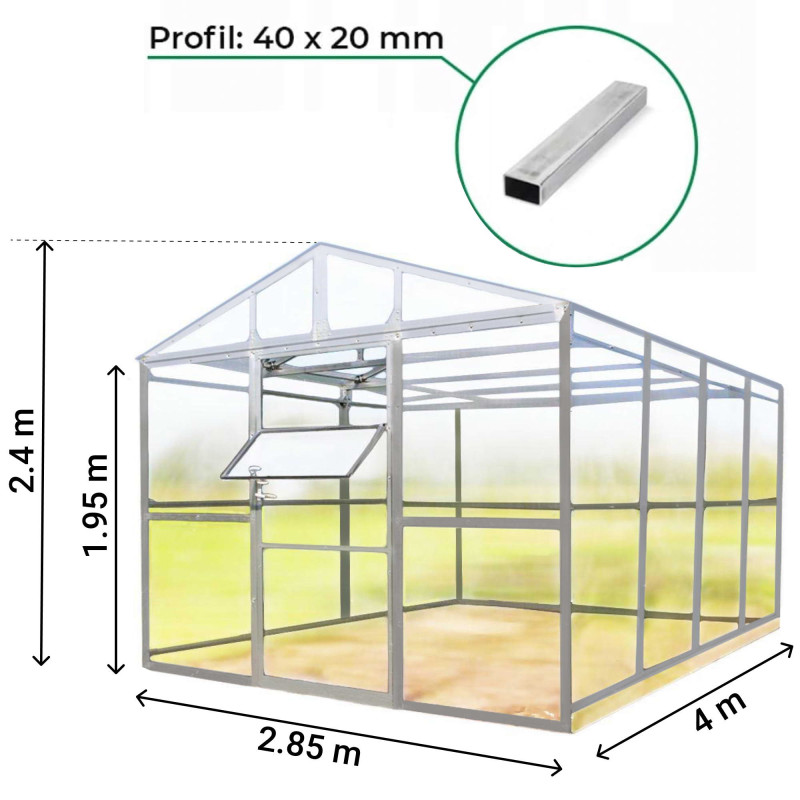
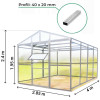
- Model: 4 x 2,85m
- Description
- Problem & Solution
- How It Works
- Material & Warranty
- Use Cases
- In the Range
- Environment
- FAQ
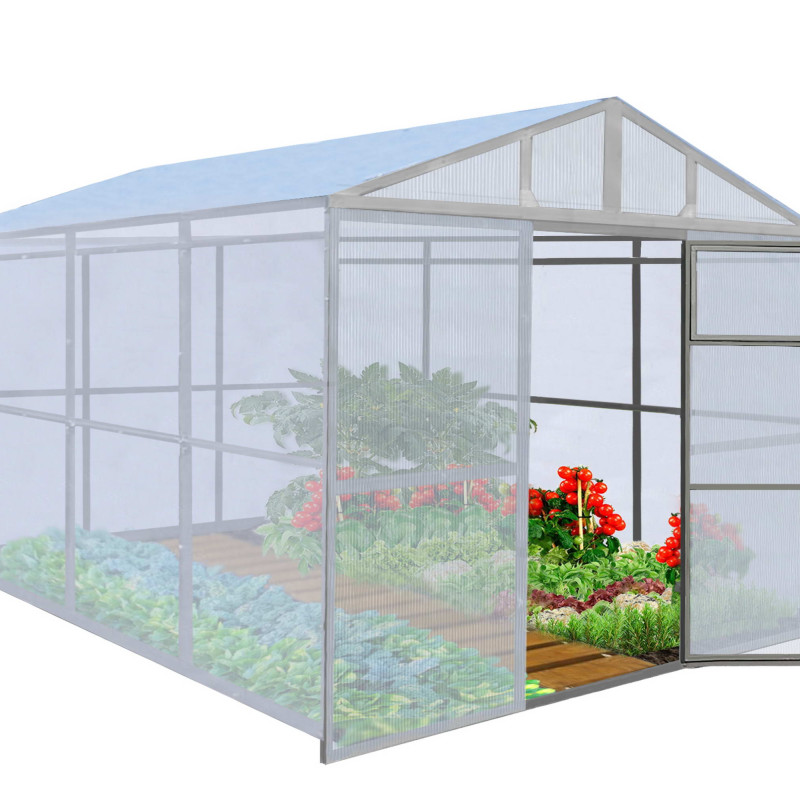
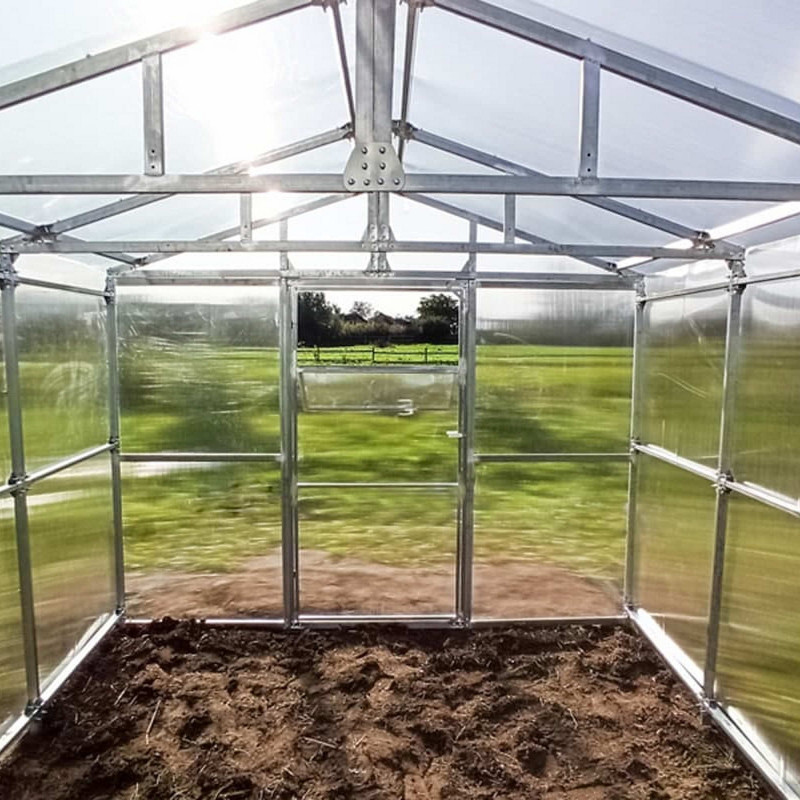
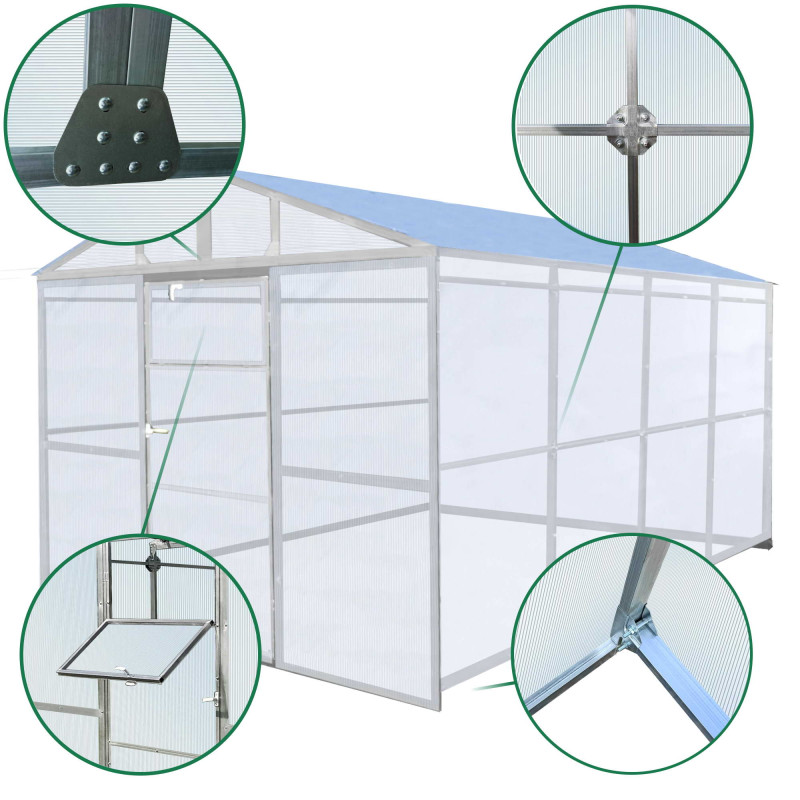
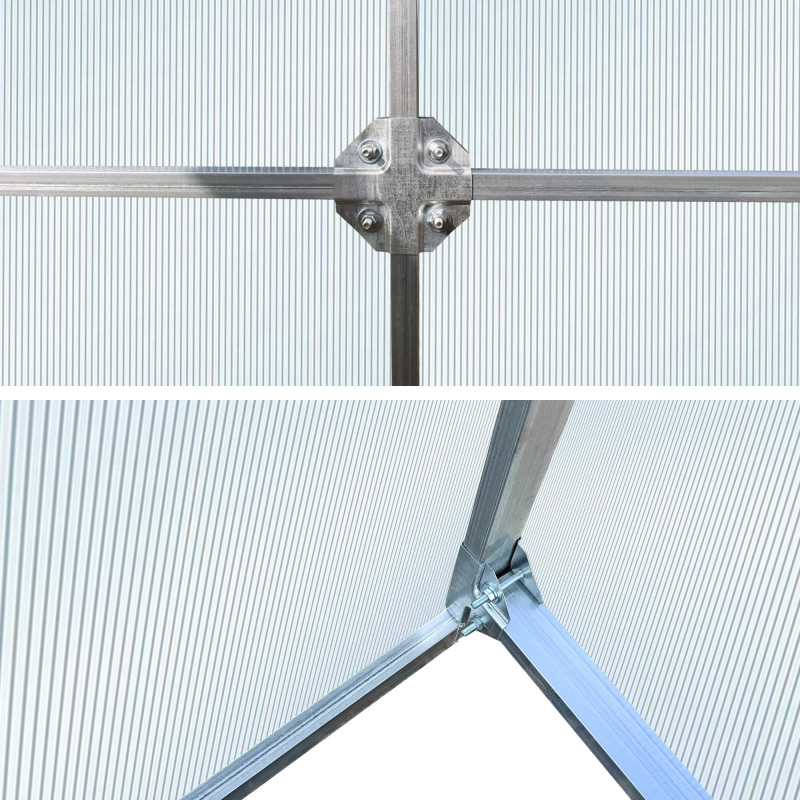
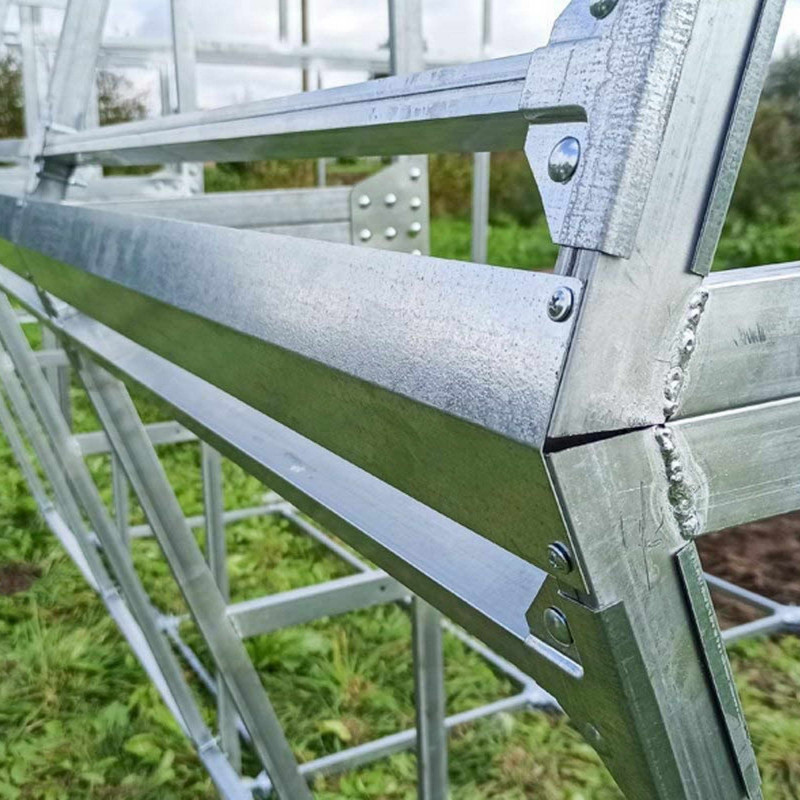
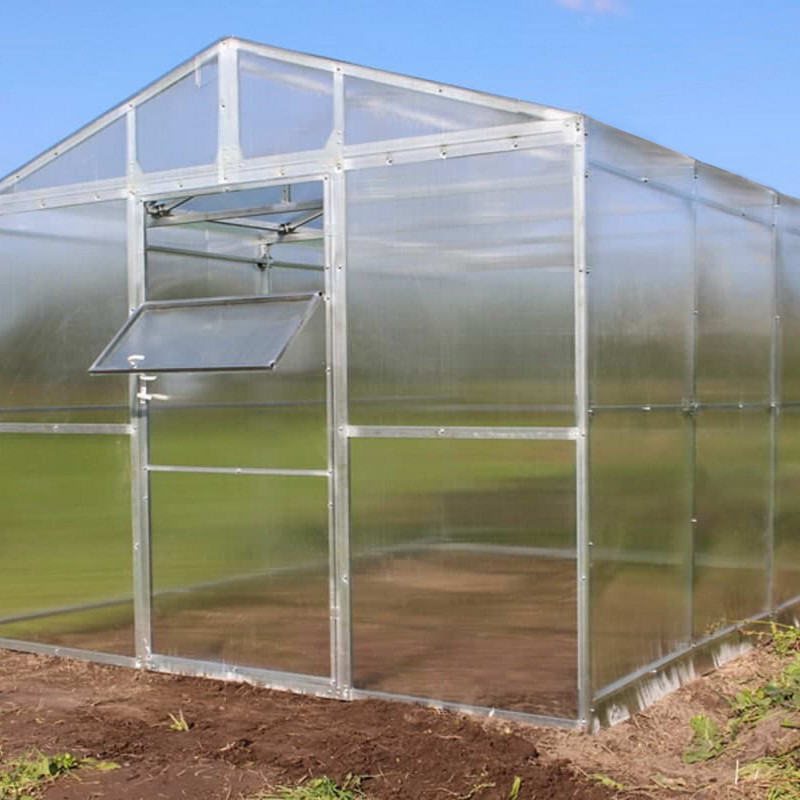
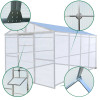
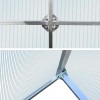
- STURDY GREENHOUSE CONSTRUCTION: The frame of the greenhouse is made of 40x20 mm metal profile tubes with double-sided galvanized coating. The bolted connection ensures a monolithic structure, provides extra rigidity and strength, guarantees precise assembly geometry, and allows you to disassemble and relocate the greenhouse easily.
- DOUBLE GALVANIZED FRAME: The tubular frame is coated with zinc on both sides, permanently protecting all metal elements from rust without the need for paint.
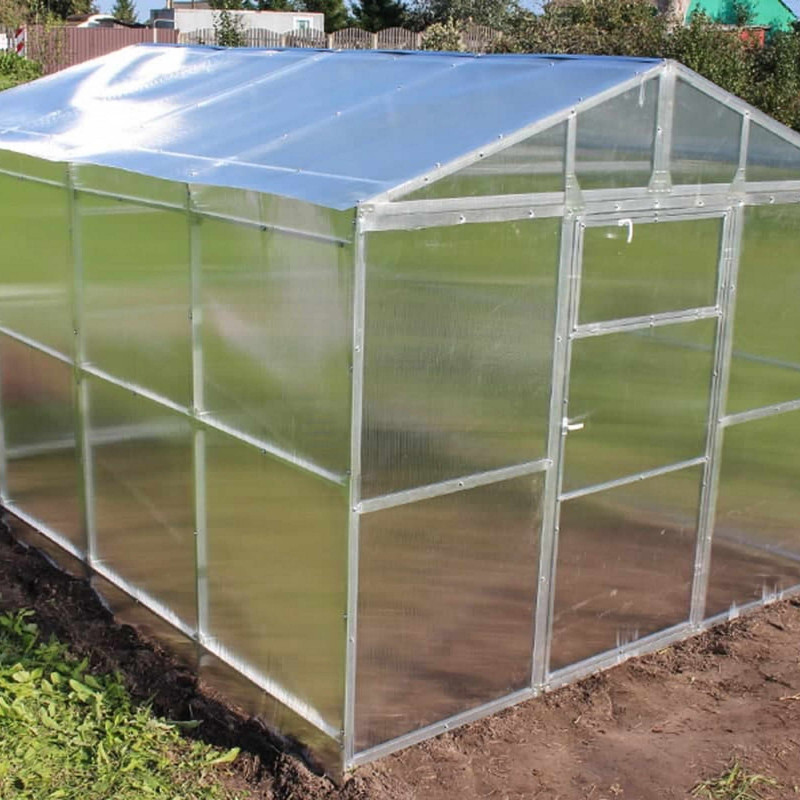
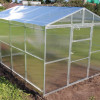
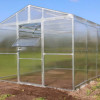
- GROUND STAKES INCLUDED: The kit comes with ground stakes for secure installation directly into the soil. Polycarbonate panels are fixed to the metal frame with screws and rubber sealing washers. Two doors and ventilation windows on each end significantly improve airflow inside the greenhouse.
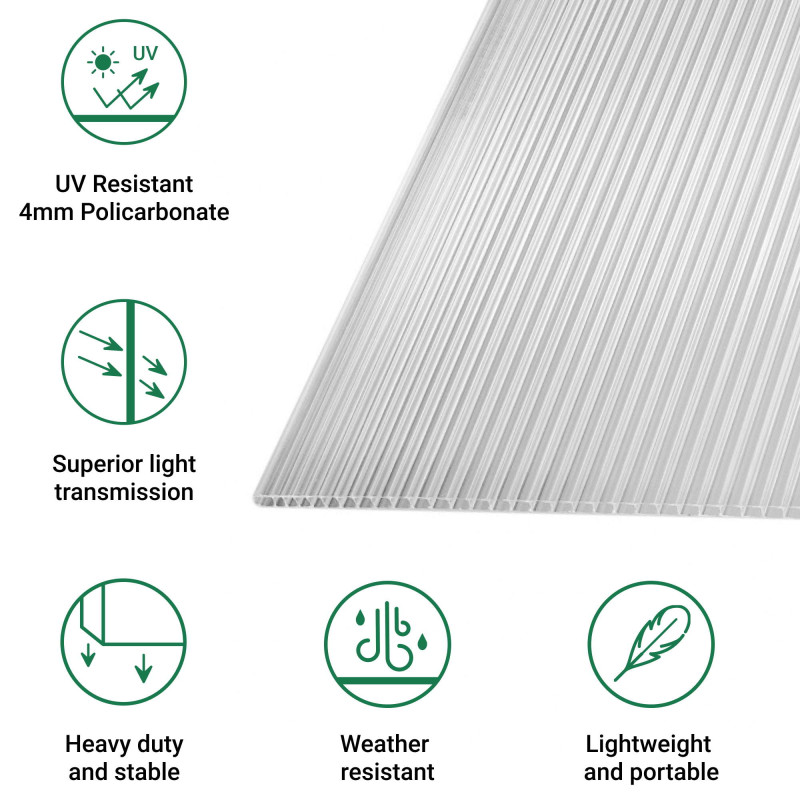
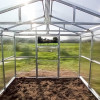
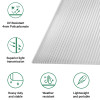
- POLYCARBONATE PANELS: The set includes 4 mm polycarbonate sheets with UV protection. The twin-wall polycarbonate structure creates a stable microclimate, ensuring a rich harvest regardless of weather conditions.
- EASY INSTALLATION: No special skills are required to assemble this greenhouse. It can be put together by one or two people in just 2–3 hours.

Environment — Plant Towers (GARTENDEK)
1. Carbon Footprint (Production & Logistics)
The carbon footprint of GARTENDEK Plant Towers is determined by three factors: polypropylene production, manufacturing location, and logistics distance.
Material: Polypropylene (PP #5) is a petroleum-based polymer. However, the declared service life of 10+ years significantly reduces the carbon footprint per year of use compared to shorter-lived alternatives (e.g., cheap plastic planters that crack after 1–2 seasons).
Production: Manufacturing takes place in Slovenia (EU) by partner Kumplast d.o.o. under GARTENDEK quality control. European production significantly reduces transport distance compared to non-EU alternatives.
Logistics: Each tower is shipped in a cardboard box (40×40×42 cm). Product weight ranges from 3.5 kg (3+1) to 5.2 kg (5+1) for the tower alone. With pump and timer (where applicable), weight increases by approximately 0.5–1 kg. Courier delivery within the EU typically generates 5–15 kg CO₂e per shipment depending on model and distance.
Numerical estimate (category average): For a medium-sized tower (4+1), the estimated carbon footprint from production and delivery within Central Europe is approximately 8–12 kg CO₂e per unit.
2. Zero Plastic Packaging
GARTENDEK Plant Towers are shipped with minimal plastic packaging.
Primary packaging: All components (tiers, inserts, reservoir, pump where applicable, timer where applicable) are packed in a cardboard box.
Secondary packaging: The cardboard box is not wrapped in plastic film. No stretch film, no PVC ties on the outer box.
Internal plastic components: Individual parts may be wrapped in thin plastic bags to prevent scratching during transit. This is the only plastic packaging — less than 2% of total packaging weight.
Customer action: After receiving the tower, the user removes components from the cardboard box. The box is recyclable as paper/cardboard waste. Plastic bags can be recycled as plastic waste (LDPE).
Cardboard box disposal: The box can be:
- Recycled as paper/cardboard waste
- Composted (if shredded, as brown material)
- Used as storage or protective covering
Plastic content per shipment: Less than 2% of total packaging weight (thin protective bags only).
3. Water Conservation
The Plant Tower is designed as a closed-loop water circulation system (in pump versions) or gravity-fed distribution system (in manual versions). Both designs significantly reduce water consumption compared to traditional gardening.
Closed-loop design (pump versions): Water recirculates continuously between the bottom reservoir and the top tank. Water is not lost to drainage or runoff. Estimated water savings: 60–80% compared to watering individual pots.
Gravity-fed design (manual versions): Water is distributed evenly across all tiers through the central cone. No water is wasted on overwatered top tiers or dry bottom tiers. The T-valve allows precise flow control — from drip to continuous stream.
Water volume: The top reservoir holds ~5 litres of water. In pump versions, the total water in the system (reservoir + circulation) is ~6–7 litres depending on the number of tiers.
Evaporation losses: Minimal — water is contained within the closed system. Losses occur only through plant transpiration and minor evaporation from the top reservoir.
Comparison to traditional gardening: Traditional pot watering loses 30–50% of water to drainage and evaporation. The Plant Tower eliminates drainage losses entirely (in pump versions) or significantly reduces them (in manual versions).
Verdict: The product enables water-efficient home food production with up to 80% less water than traditional methods.
4. Food Waste Reduction
The Plant Tower is directly involved in food production — it is designed for growing herbs, leafy greens, strawberries, and compact vegetables.
Local food production: By enabling home growing on balconies, patios, and kitchen windowsills, the tower reduces dependence on long supply chains. Fresh produce can be harvested steps from the kitchen, eliminating transport losses and retail waste.
Harvest what you need: Home growers harvest only what they need, when they need it — significantly reducing the 30–40% waste typical of store-bought greens.
No plastic packaging: Home-grown produce requires no plastic clamshells, bags, or labels — eliminating packaging waste entirely.
Quantified impact: A single 5+1 tower can produce 30–50 servings of leafy greens per season, directly replacing store-bought produce and its associated food waste.
Food miles eliminated: Fresh herbs typically travel 1,500–3,000 km from farm to kitchen. Home-grown herbs travel 0 km — zero transport emissions, zero cold chain energy, zero retail waste.
5. Product Lifecycle
Declared service life: 10+ years of indoor or outdoor use under normal conditions (temperature range −20 °C to +40 °C, UV exposure, water contact).
Design philosophy: The tower is engineered as a durable home gardening tool — not a disposable seasonal item. The UV-stabilized polypropylene (PP #5) is designed to remain structurally stable and UV-resistant for a decade or more.
Maintenance requirements — Tower: Minimal. Rinse components at the end of each season. No painting, no sealing, no rust protection.
Maintenance requirements — Pump (where applicable): Clean every 3–6 months. Replace if worn after several years of use.
Failure modes — Tower: Polypropylene may become brittle after extreme UV exposure over many years. Under normal use (balcony, patio, garden), the material does not rot, rust, or biodegrade. Mechanical damage from impact is possible but unlikely.
Failure modes — Pump: Pump may fail after extended use (typical lifespan 3–5 years depending on quality and maintenance). Replacement pumps are available.
Obsolescence: The tower does not become functionally obsolete. Tiers are modular and can be added or replaced. Components are interchangeable across all models.
6. Transport Packaging
Primary packaging: Cardboard box (corrugated cardboard, typically with recycled content). Box dimensions: 40×40×42 cm (same for all models).
Packaging weight: Cardboard adds approximately 0.3 kg to the shipment.
Packaging materials:
- Corrugated cardboard (recyclable, compostable)
- Thin plastic bags (LDPE) for internal components — less than 2% of packaging weight
- Paper instructions (recyclable)
Logistics class: Standard courier (DPD, GLS, national postal services) for all models. The flat-pack design maximizes shipping efficiency — up to 12 towers per pallet.
Space efficiency: The cardboard box is form‑fitted to the stacked components. Void space is minimal (typically less than 10% of box volume).
7. End‑of‑Life & Recyclability
Material composition — Tower:
- Polypropylene (PP #5) — >98% of product weight
- Metal T-valve with metal fixator — small quantity, recyclable
- Pump (where applicable) — electrical components, requires separate recycling
- Timer (where applicable) — electrical components, requires separate recycling
Current recyclability status — Tower: Polypropylene (PP #5) is fully recyclable through standard plastic recycling streams. PP is widely recycled in the EU, with established collection and reprocessing infrastructure. Recycling code: ♻ 5 PP.
Current recyclability status — Pump & Timer: Electrical components are covered by the WEEE Directive. They should be disposed of at designated e‑waste collection points.
Responsible disposal options — Tower:
- Plastic recycling (preferred) — disassemble the tower, separate PP components from metal parts, deliver to plastic recycling facility
- Reuse (best option) — disassemble and sell/give away for continued use as a growing tower
- Energy recovery (incineration with power generation) — PP has high calorific value (∼46 MJ/kg)
- Landfill (non‑hazardous) — only as last resort; PP is inert and does not leach toxins
Responsible disposal options — Pump & Timer: Take to designated e‑waste collection points (WEEE compliance).
Comparison to alternatives:
- Ceramic or terracotta pots — not recyclable (crushable as aggregate, but energy‑intensive), significantly heavier, breakable
- Wooden planters — not recyclable (treated wood is hazardous waste), end up in landfill or incineration
- Cheap plastic planters (unknown polymer) — often not recyclable, end up in landfill after 1–2 seasons
Circular economy potential: PP can be recycled indefinitely without significant loss of material properties. GARTENDEK encourages reuse and recycling at end of life.
8. Summary Table (Category Ranges)
| Parameter | Range / Value |
|---|---|
| Product name | GARTENDEK Plant Tower (3+1 / 4+1 / 5+1, with or without pump) |
| Declared service life | 10+ years |
| Number of planting pockets | 12 (3+1), 16 (4+1), or 20 (5+1) |
| Tower weight (without substrate, without pump) | 3.5 kg (3+1), 4.3 kg (4+1), 5.2 kg (5+1) |
| Tower weight with pump & timer | +0.5–1 kg |
| Packaging dimensions | 40×40×42 cm (all models) |
| Packaging weight (cardboard) | ~0.3 kg |
| Plastic packaging | less than 2% of total packaging weight (thin protective bags) |
| Carbon footprint estimate (production + delivery within EU) | 5–15 kg CO₂e (depending on model and distance) |
| Water savings (compared to traditional pot watering) | 60–80% (pump versions), 30–50% (manual versions) |
| Water volume in system | ~6–7 litres (depending on number of tiers) |
| Recyclability — Tower | Fully recyclable — PP #5 (♻ 5) |
| Recyclability — Pump & Timer | WEEE — e‑waste recycling |
| Material leaching into soil/water | None — PP #5 is food-safe and chemically inert |
| Food‑safe for growing edible plants | Yes — FDA and EFSA approved for food contact |
9. EU Environmental Frameworks
REACH (EC 1907/2006): Polypropylene (PP #5) is a REACH‑registered substance. No SVHC (Substances of Very High Concern) are intentionally added. The material contains no plasticisers, BPA, phthalates, or heavy metals. Tested by TÜV Rheinland for REACH compliance.
Food Contact Materials Regulation (EC) 1935/2004 & (EU) 10/2011: PP #5 is compliant with EU regulations for materials intended to come into contact with food. The material is safe for growing edible plants.
CE marking: The tower itself does not require CE marking (non‑electrical garden product). The pump and timer carry CE certification as electrical components.
WEEE Directive (2012/19/EU): The pump and timer are covered by the Waste Electrical and Electronic Equipment Directive. They should be disposed of at designated e‑waste collection points.
EU Ecolabel (optional): The product does not carry EU Ecolabel certification. However, its long service life (10+ years), full PP recyclability, and water savings align with Ecolabel principles.
Packaging Directive (94/62/EC): The cardboard box is compliant with EU packaging requirements. Plastic content is minimal (less than 2% of packaging weight).
Single‑Use Plastics Directive (SUP — EU 2019/904): The product is not a single‑use plastic item. It is a durable, long‑life product (10+ years). The minimal plastic packaging (thin protective bags) is within scope but quantities are negligible.
EU Green Deal / Circular Economy Action Plan: The product aligns with durability, repairability, and recyclability principles: long service life (10+ years), no planned obsolescence, fully recyclable PP (#5), water savings (60–80%), and reduced food waste. Plastic recycling and water efficiency are priorities in EU circular economy targets.
Farm to Fork Strategy (EU): The product supports short supply chains and local food production — key objectives of the Farm to Fork Strategy. Home‑grown produce eliminates food miles, cold chain energy, and retail waste.