


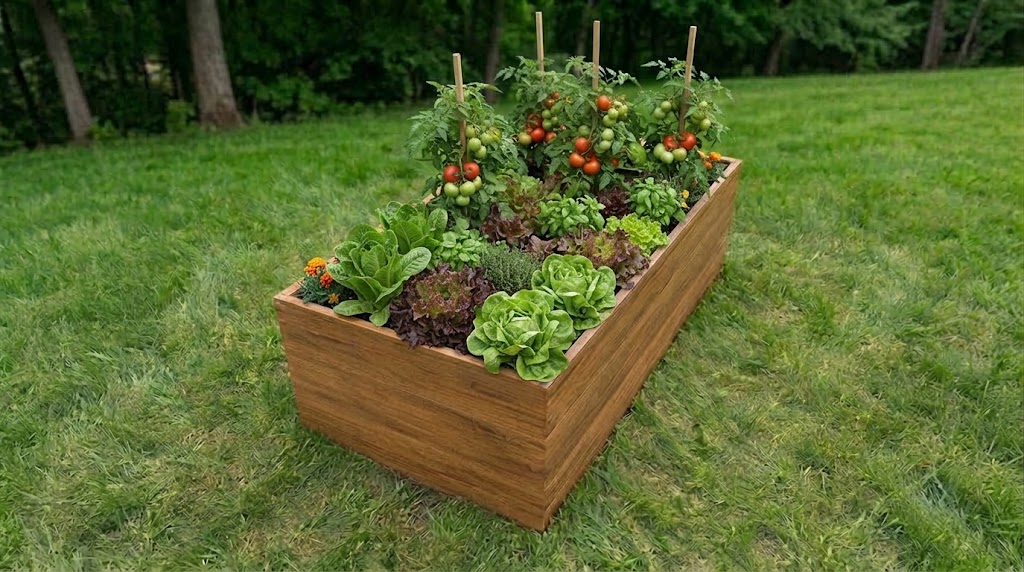
How to Properly Fill a Raised Garden Bed: 3 Key Layers as the Basis for a Good Harvest
A good result in a raised garden bed starts with proper filling. A multi-layer structure helps to efficiently use the entire volume of the bed and create suitable conditions for plant development.
The minimum recommended scheme for deep models includes three functional layers:
- drainage;
- organic;
- planting.
Let's look closely at how to form each layer—from the base to the top fertile soil. Proportions are approximate and may vary depending on the depth of the bed and the root system of the plants being grown.
Base Protection
Before filling the raised garden bed, don't forget about the main barrier. A protective mole net is laid at the bottom—in GARTENDEK beds, this is already included in the kit. The net creates a physical barrier for moles, voles, and mice trying to penetrate the bed from below. At the same time, the mesh size does not obstruct natural water drainage and the movement of earthworms.
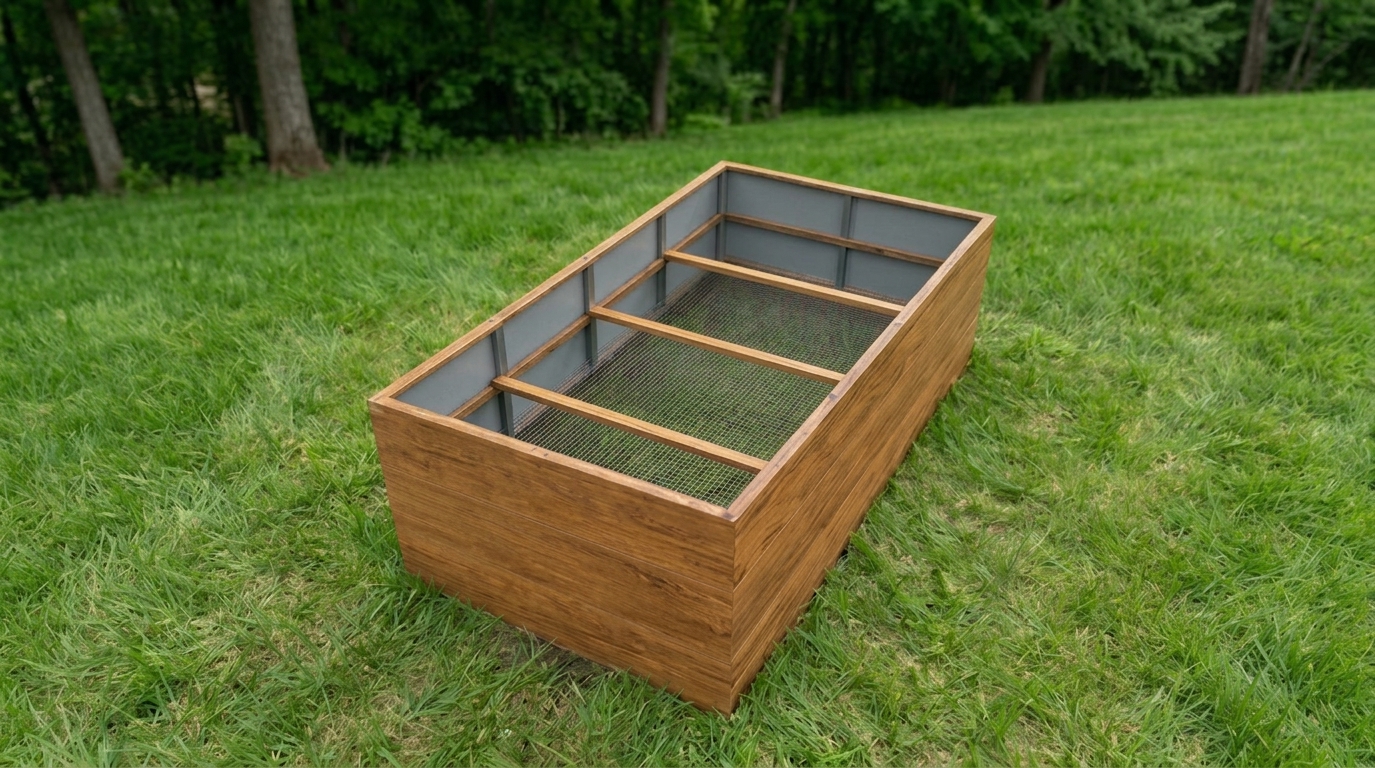
Protective mole mesh at the base of the raised bed
Layer 1. Drainage (~1/3 of the height)
What to use: Large branches, tree log slices, chopped twigs, wood chips, sunflower or corn stalks.
Why it is needed:
- Creates air gaps that help drain excess water.
- Large wood takes the longest to decompose, forming a stable foundation for subsequent layers.
Useful tip: Protect plants against nitrogen starvation—during the decomposition of fresh wood, microorganisms can use some of the nitrogen contained in the soil, temporarily reducing its availability to plants. Therefore, place wood materials only in the bottom layer, giving preference to dry or already seasoned branches.
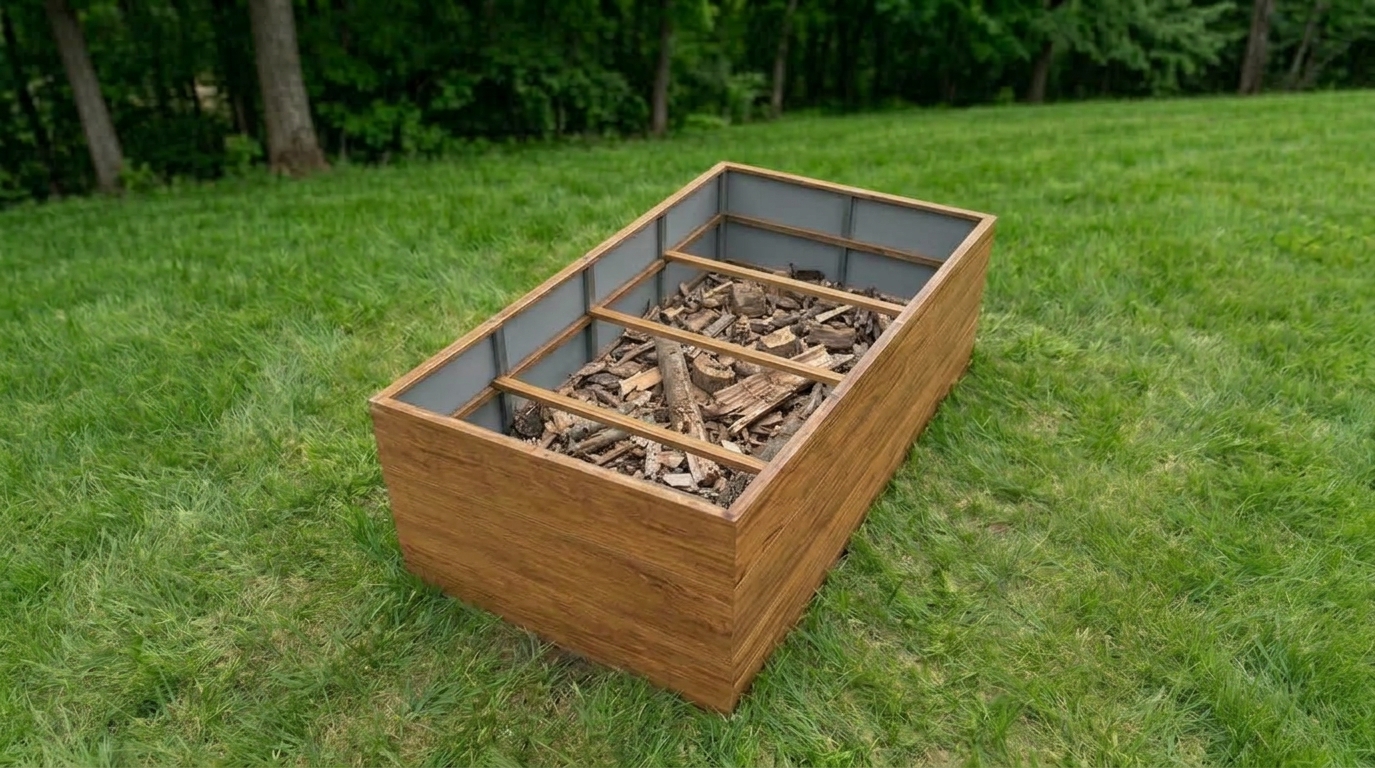
Layer 1. Drainage layer at the bottom of the raised bed
Layer 2. Organic (~1/3 of the height)
2.1. Plant materials
What to use: Mown lawn grass, fallen leaves, thin twigs, dry straw, shredded paper.
Why it is needed:
- Fills the gaps between large branches.
- Fine organics usually decompose first, activating soil microorganisms.
- Helps retain moisture inside the bed and slows down drying out in the heat.
Useful tip: Do not use diseased plants, weeds with matured seeds, or roots and rhizomes of perennial weeds. Choose healthy plant residues or wilted grass for filling.
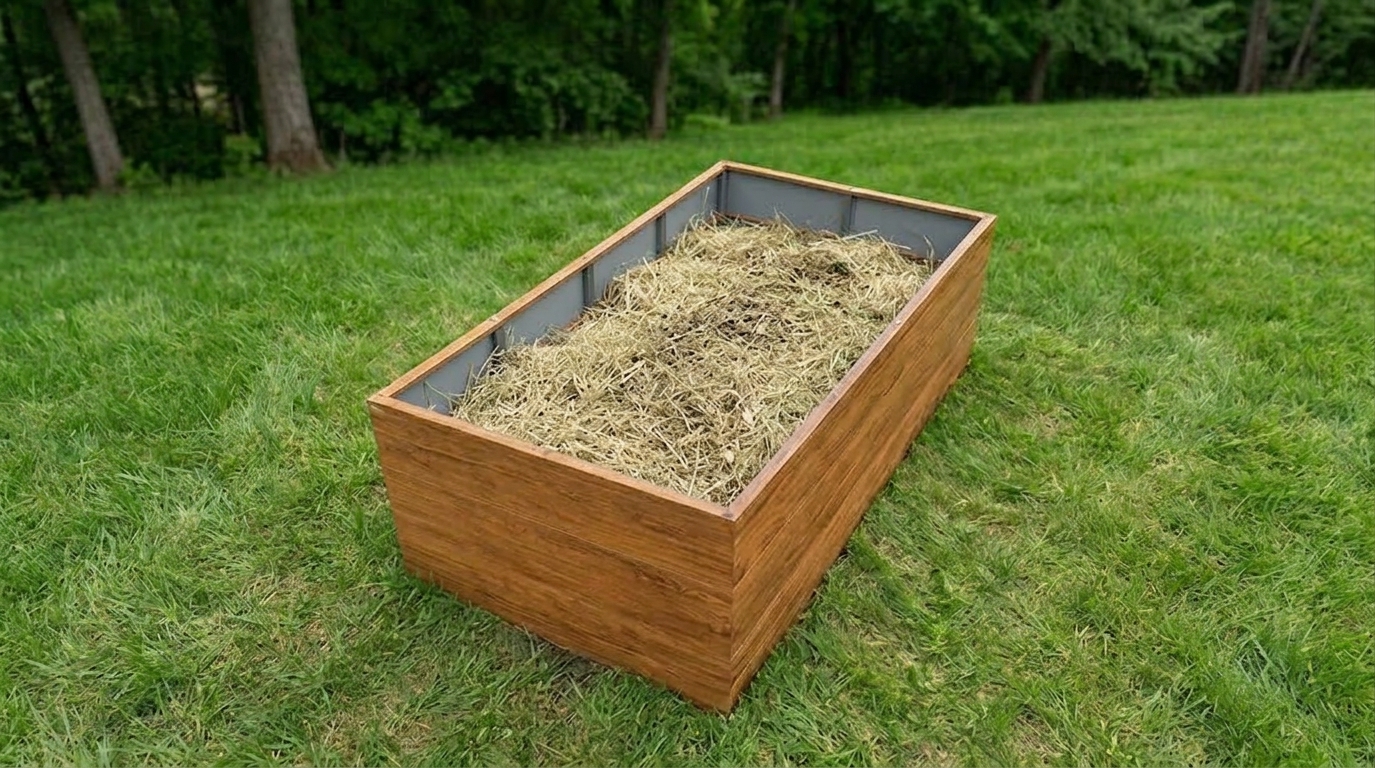
Layer 2.1. Plant materials in the organic layer
2.2. Mature organics
What to use: If desired, compost can be supplemented with humus, vermicompost, or well-rotted manure. This is an optional, rather than mandatory, component of the organic layer.
Why it is needed:
- Supports the activity of soil microorganisms.
- Helps retain moisture and maintains the structure of the filling.
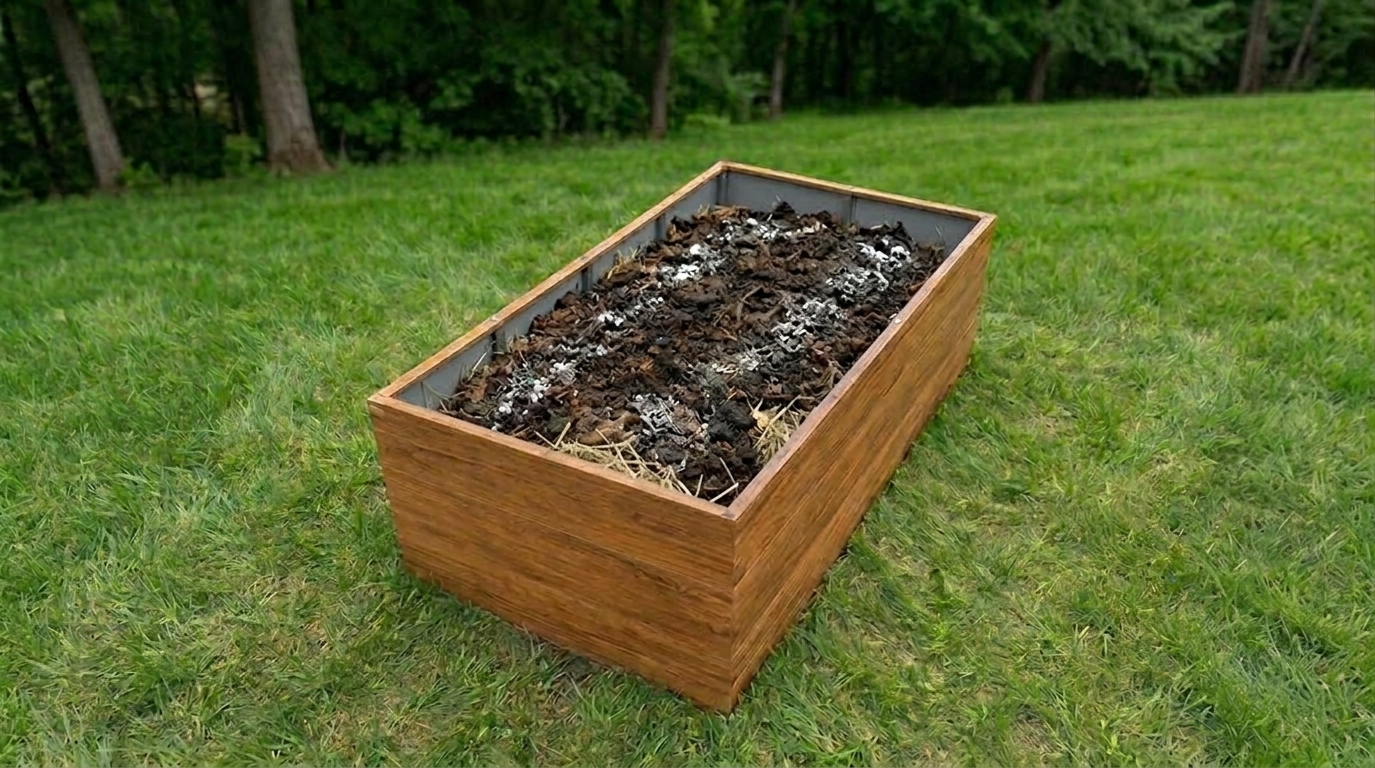
Layer 2.2. Mature organics in the raised bed
Layer 3. Planting (~1/3 of the height)
What to use: Quality garden soil or special soil mix for raised beds.
Why it is needed:
- Serves as the main zone for the development of the root system of seeds and seedlings.
- Protects tender young roots from direct contact with the still-decaying organics of the lower layers.
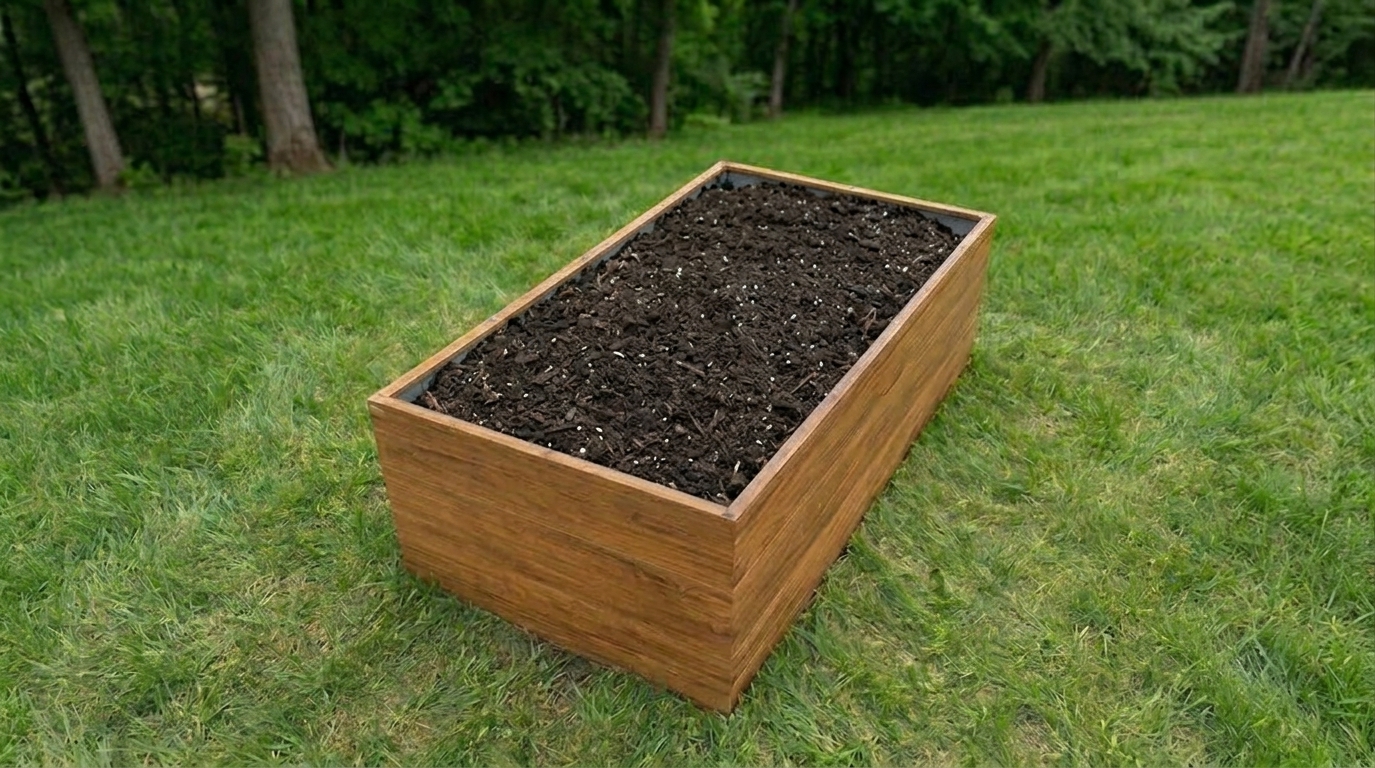
Layer 3. Planting layer with quality garden soil
???? 3 Main Rules for Filling the Bed
- Layer-by-layer watering: Moderately moisten the layers with water during installation. Moisture is necessary to start natural decomposition, but the filling should not be waterlogged.
- Compaction of lower layers: Branches and plant materials should be pressed down slightly with your hands or the back of a rake to avoid deep soil subsidence in the future.
- Accounting for shrinkage: Organic materials gradually decompose and compact. The most noticeable shrinkage usually occurs during the first season and the first 1–2 years. Prepare a supply of fertile soil and restore the level of the top layer over the first few seasons as needed.
Why GARTENDEK Raised Beds Fit This Technology
- Optimal height (63 cm): Allows the use of a three-layer filling system. The approximate height of each functional layer is about 21 cm.
- All inclusive: The mole net is already included in the kit—you don't need to buy materials separately.
- Stable construction: Fixing stakes provide rigidity, help maintain the geometry of the walls, and protect the structure from deformation under the pressure of the filling.
Summary
Proper multi-layer filling helps to rationally use the volume of a deep bed and form a suitable basis for growing plants.
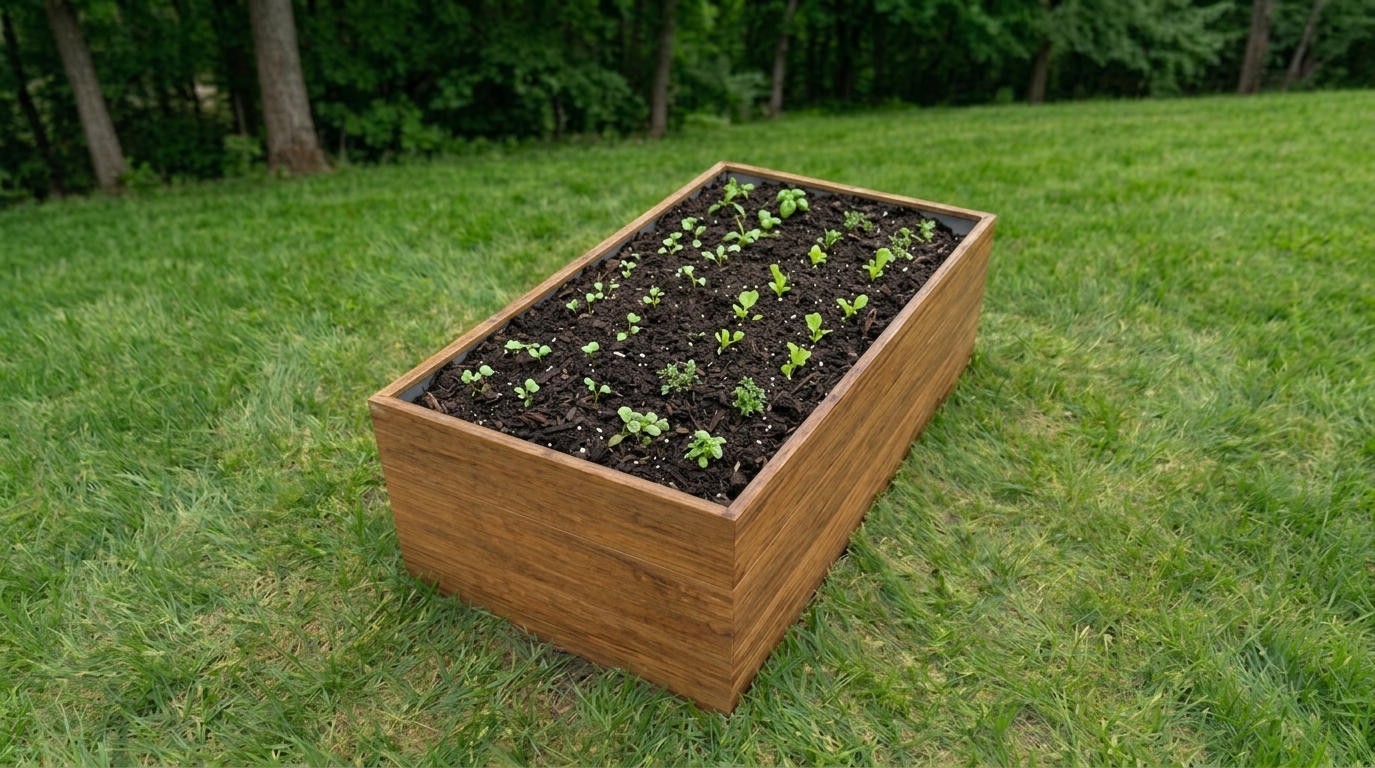
Ready raised bed with healthy plants growing
???? Visit the GARTENDEK catalog to choose the ideal garden bed for your plot and start the new season without any hassle!
Leave a comment